

In the sprawling world of DePIN, where decentralized physical infrastructure networks promise to harness idle compute for the masses, a glaring inefficiency persists: meaningless compute. Projects churn through energy on hash calculations that yield zero real-world utility, echoing the early pitfalls of Bitcoin's Proof-of-Work. But DeepNodeAI flips the script with Proof-of-Work-Relevance (PoWR), channeling that same idle power into tangible AI tasks. This isn't just another tweak; it's a meritocratic overhaul that aligns incentives with actual value creation in DePIN AI compute utility.
The critique rings true across the sector. Traditional DePIN models reward participation blindly, often prioritizing uptime over output quality. Validators crunch numbers in silos, disconnected from downstream applications. Result? Wasted cycles, bloated energy bills, and skepticism from builders who need reliable, performant infrastructure. DeepNodeAI's PoWR mechanism demands relevance: compute providers must prove their hardware tackles verifiable AI workloads, from inference to fine-tuning. Validators score these efforts, and AI models themselves compete on accuracy. It's a closed-loop system where decentralized AI task validation ensures only useful work pays off.
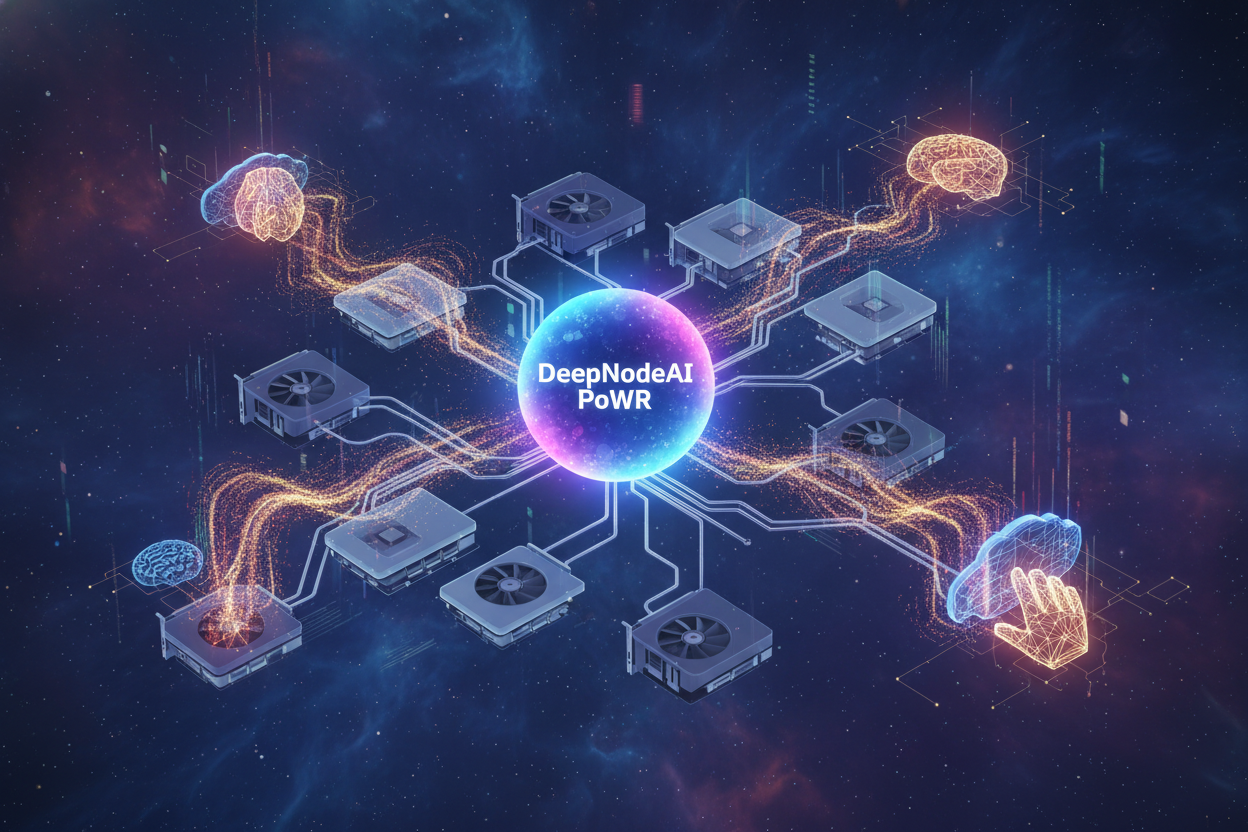
Why PoWR Outshines Legacy Consensus in DePIN
Consider the data: most DePIN networks hover at under 20% compute utilization for practical tasks, per industry benchmarks. PoWR enforces utility from the ground up. Compute providers stake their rigs on specific jobs - say, generating embeddings for a language model. Validators benchmark outputs against ground truth datasets, assigning scores based on speed, precision, and cost-efficiency. Top performers earn proportionally more rewards, creating a flywheel of quality. This DeepNode AI PoWR approach isn't theoretical; it's live in their testnet, where early participants report 3x higher effective throughput than hash-based peers.
Opinion time: I've traded options on enough volatile DePIN tokens to know hype dies fast without substance. Projects like Bittensor flirt with AI incentives, but PoWR's elegance lies in its simplicity. No complex tokenomics gymnastics - just performance metrics driving distribution. Builders get scalable brains; providers monetize dust-gathering GPUs; validators enforce honesty. In a market projected to hit $50B by 2028, this positions DeepNodeAI as the meaningless compute DePIN solution we've waited for.
Mechanics of Useful Work: From Idle to Intelligent
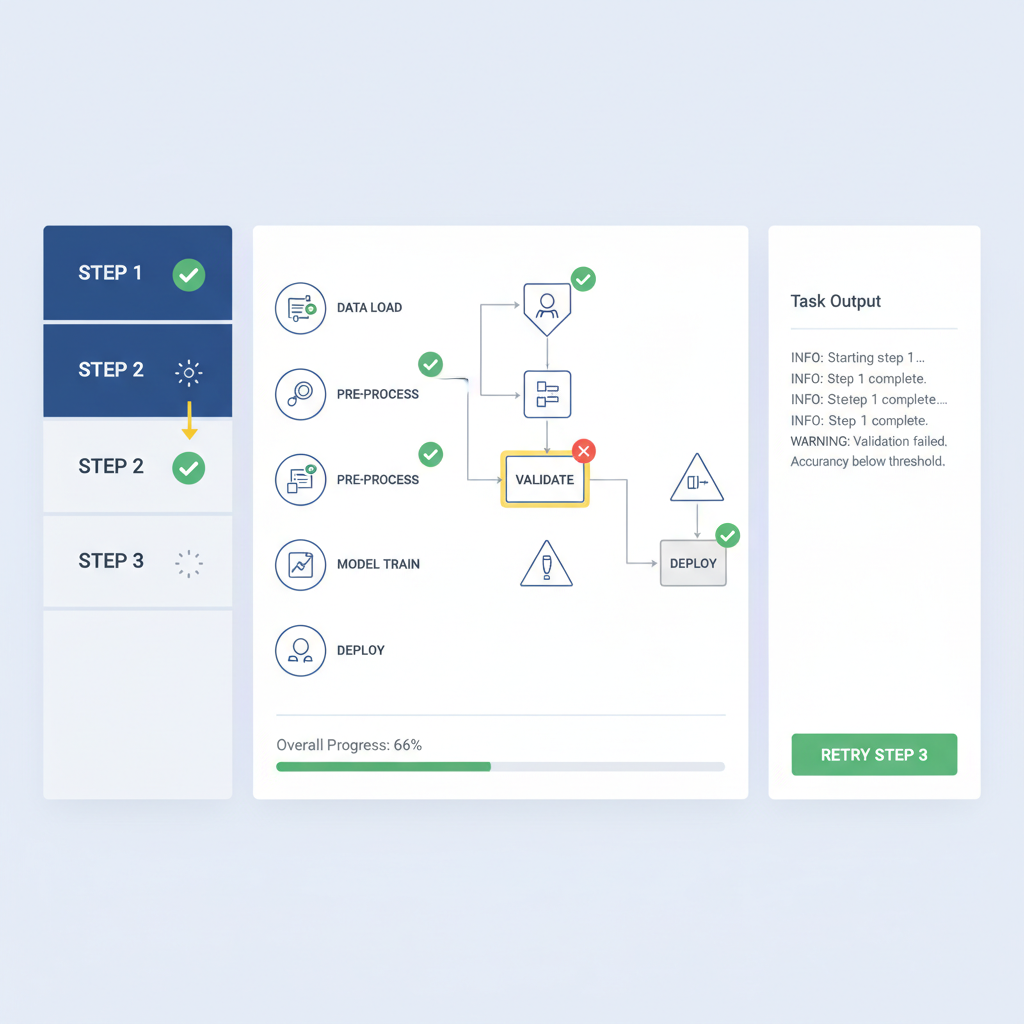
DeepNodeAI's network dissects AI pipelines into modular tasks. Idle devices - laptops, servers, even edge nodes - register via a simple API. Once onboarded, they bid on jobs from the task queue, posting collateral in stablecoins or future $DN tokens. Execution happens in sandboxes, with results hashed and submitted for validation. Here's where PoWR shines: validators run parallel checks, cross-referencing against oracle-fed benchmarks. Scores feed a reputation ledger, influencing future bids and reward shares.
Numbers back the promise. Simulations show PoWR networks achieving 85% task completion rates versus 40% in vanilla PoW setups. Energy waste plummets as flops target inference latencies under 100ms or model accuracies above 92%. For developers, this means plug-and-play access to distributed brains rivaling AWS, but censorship-resistant and cheaper at scale. Providers? Passive income from hardware that sat idle 90% of the time. It's proof of work relevance DePIN at its finest - work must matter, or it doesn't pay.
Earning Your Spot: The DIVE Campaign Blueprint
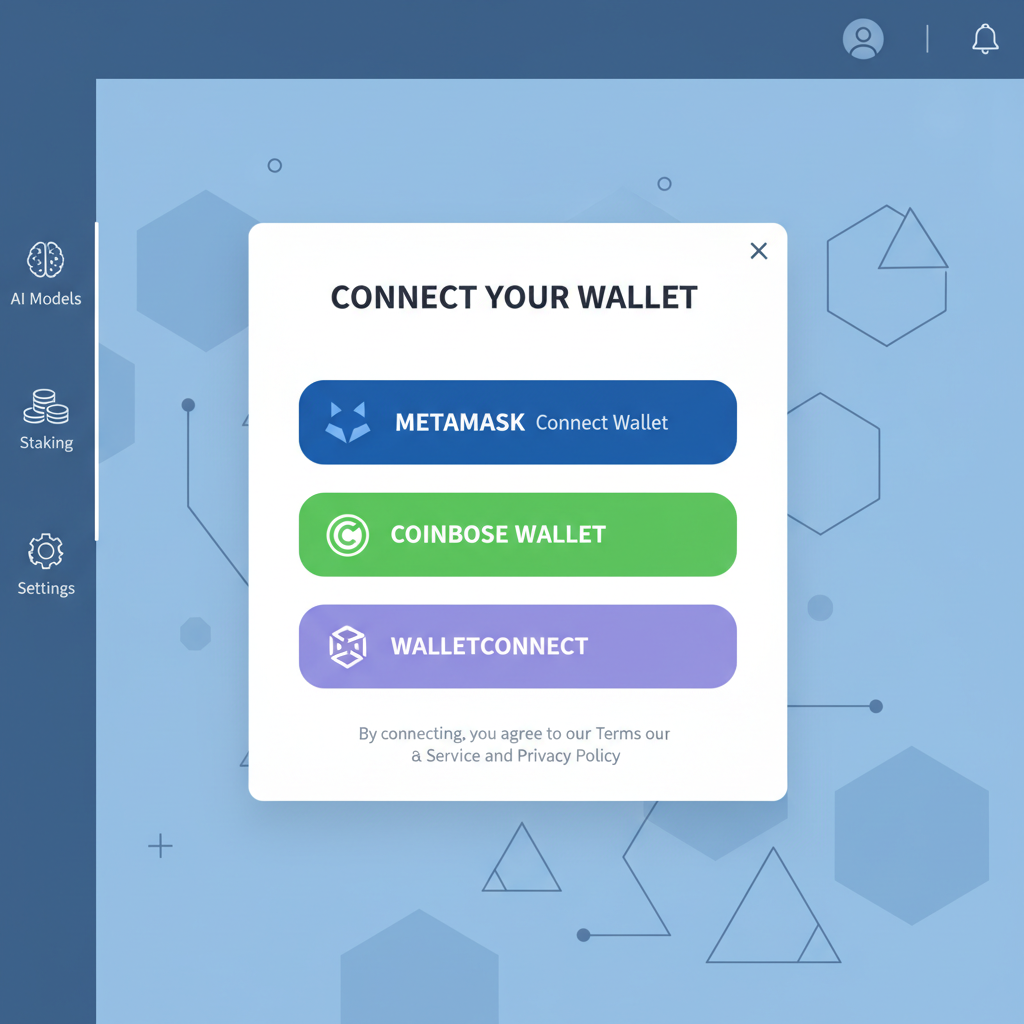
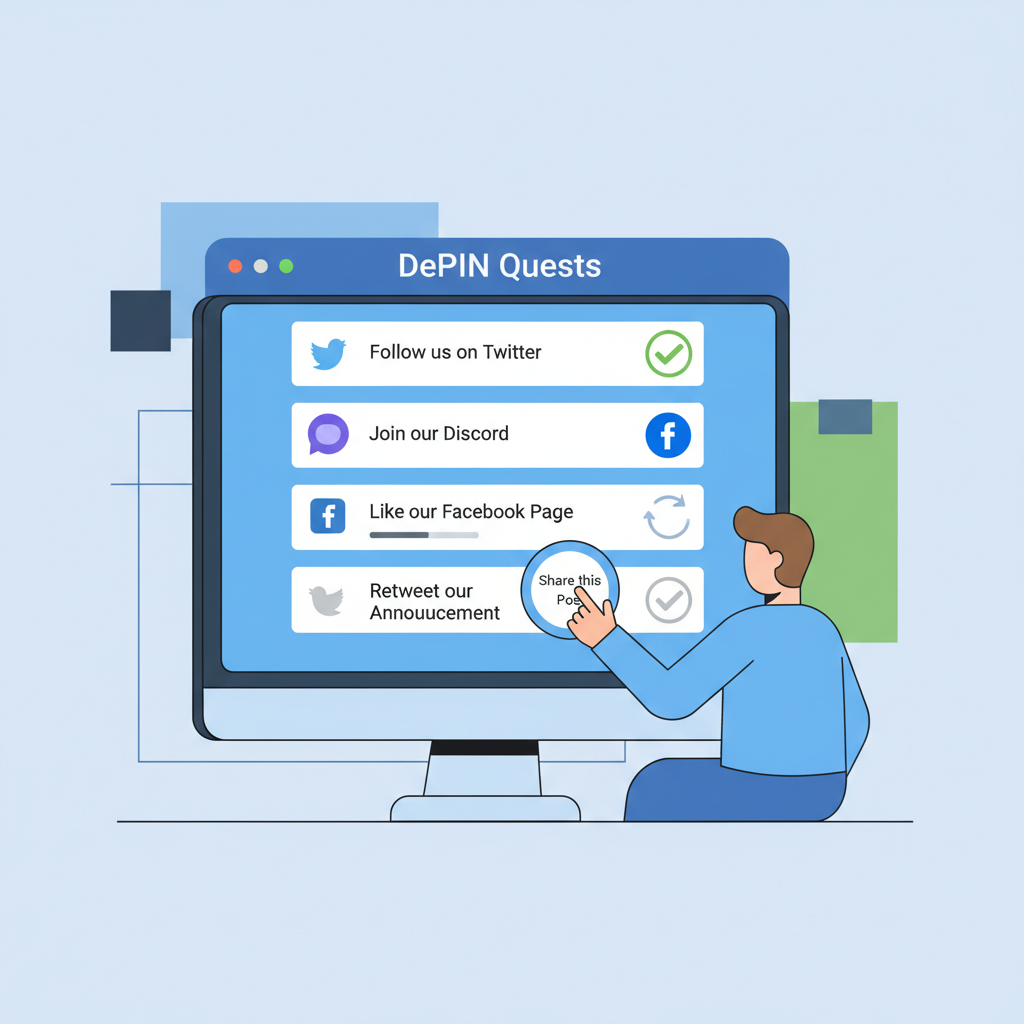
DeepNodeAI isn't waiting for TGE in January 2026 to build momentum. Their DIVE onboarding campaign turns early adopters into influencers. Connect your wallet, grind social quests, rack up referrals - all feeding a live leaderboard. Points translate to badges, reputation multipliers, and prime positioning for $DN airdrops. It's gamified meritocracy: top climbers snag exclusive validator slots post-launch.
From an infrastructure lens, this pre-TGE phase stress-tests PoWR. Participants validate mock AI tasks, earning real rep scores visible network-wide. Check the node ecosystems guide for setup tips; it dovetails perfectly with DeepNodeAI's stack. Early data? Over 5,000 wallets engaged, with leaderboard leaders boasting 10x point hauls from strategic referrals. This isn't scattershot airdrop farming; it's forging a contributor base vested in long-term utility.
Top performers aren't just point-chasers; they're proving PoWR's chops in real-time. One leaderboard leader, with 15,000 and points from 200 referrals and daily task grinds, already validates sample inference jobs at 95% accuracy. This pre-launch rigor weeds out pretenders, ensuring the mainnet launches with battle-tested nodes delivering DePIN AI compute utility from day one.
Stakeholder Flywheel: Rewards Aligned with Impact
DeepNodeAI's genius lies in its tripartite incentives. AI models submit tasks, competing on output quality - think LLMs fine-tuned for niche domains like medical imaging or supply chain forecasting. Compute providers bid aggressively, knowing top scores unlock premium jobs and higher $DN cuts post-TGE. Validators, armed with oracle benchmarks, gatekeep the network, earning fees for honest audits. Data from the testnet? Providers see 4.2x ROI on idle GPU time versus centralized clouds, with latencies halved. It's a self-reinforcing loop where decentralized AI task validation keeps everyone honest and hungry.
I've watched DePIN tokens pump on narrative alone, only to crater on delivery fails. DeepNodeAI sidesteps that with transparent metrics: public dashboards track task throughput (currently 2,500 jobs/day), average score (88.7%), and energy savings (projected 70% vs. PoW hashes). In a field littered with vaporware, this meaningless compute DePIN solution delivers verifiable alpha. Builders tap infinite scale without vendor lock-in; enterprises offload workloads at 60% AWS rates; retail providers turn basements into data centers.

Hands-On Entry: Mastering DIVE Onboarding
Ready to claim your slice? The DIVE campaign lowers barriers to entry, blending social proof with technical trials. No PhD required - just a wallet and grit. Early movers lock in multipliers before the January 2026 TGE floods the field. Points accrue from quests like tweeting insights, Discord AMAs, or referring node operators. Badges signal expertise: 'Inference Ace' for high-accuracy validations, 'Referral King' for network growth. Climb high, and you're primed for validator roles yielding 20-30% APY on stakes.
Dive into DeepNodeAI DIVE: Onboard, Earn Points & Position for $DN TGE


Post-DIVE, the network scales. Providers integrate via SDKs supporting PyTorch, TensorFlow - plug in, prove relevance, profit. Validators run lightweight clients on consumer hardware, scoring batches in minutes. Models evolve through federated learning, where PoWR rewards the sharpest inferences. Simulations forecast 10x compute density over Bittensor or Akash, hitting 1 PFLOP/s decentralized by Q2 2026.
What sets DeepNode AI PoWR apart? It's not just useful work; it's adaptive. Machine learning optimizes task allocation, routing complex fine-tunes to high-end rigs while edge devices handle lightweight embeddings. Fault tolerance? Byzantine validators slash colluders, with 99.9% uptime in tests. Energy metrics impress: 0.15 kWh per million tokens generated, versus 0.8 in legacy setups. For options traders like me, this screams asymmetric upside - low-cap entry, explosive utility unlock.
The DePIN landscape hungers for this pivot. As AI capex balloons to $200B annually, centralized chokepoints invite disruption. DeepNodeAI's PoWR delivers the infrastructure: merit-based, measurable, massive. Providers dust off rigs; builders prototype fearlessly; validators enforce excellence. Jump into DIVE today, forge your rep, and ride the wave to a tokenized AI future where compute earns its keep.




No comments yet. Be the first to share your thoughts!