

In the evolving landscape of AI compute, where large language models demand ever-greater volumes of high-fidelity data, centralized systems are hitting fundamental limits. They aggregate information through opaque pipelines, breeding biases and vulnerabilities to manipulation. Perceptron Network flips this script with micro quorums, nimble groups of decentralized verifiers that negotiate truth at the edge of the network. This approach powers decentralized AI compute truth negotiation, turning idle devices and human insights into a robust, reward-driven data layer.
Picture a world where your smartphone or laptop contributes to AI evolution without handing control to a tech behemoth. Perceptron Network, boasting over 700,000 nodes, makes this reality by incentivizing users to provide verified data. AI agents mint and distribute PERCs, composable mini-NFTs that reward quality contributions. This decentralized data mesh coordinates human input, spare compute cycles, and distributed validation, sidestepping the pitfalls of top-down data hoarding.
Decoding Perceptron Network's Agent-Driven Framework
At its core, Perceptron Network operates as an agent-managed incentive system built for scalability. Unlike early perceptrons limited to linearly separable problems, this modern iteration leverages Solana's low-cost infrastructure to host complex models via DePIN principles. Users become reliable data providers, earning tokens for inputs that pass rigorous checks. The network's strength lies in its ability to harness swarm intelligence, drawing from theoretical advances in decentralized AI methods.
This setup fosters a high-quality data layer essential for next-generation AI. Modern LLMs falter without diverse, verifiable inputs; Perceptron's model addresses this by democratizing access. Partnerships, such as Nuklai's collaboration with Truth Network, integrate decentralized prediction data into agents, enabling real-time verifiability. It's a shift from blind trust to community-vetted certainty.
Core Perceptron Advantages
- Micro quorums enable rapid data validation via small, decentralized node groups for quick consensus.
- PERC incentives reward users as composable mini-NFTs, minted by AI agents to boost participation.
- Idle compute utilization harnesses users' unused resources in a decentralized data mesh of 700,000+ nodes.

- Bias-resistant aggregation democratizes data from diverse sources, reducing centralized AI biases.
- Scalable DePIN truth negotiation leverages Solana for efficient, community-driven AI validation.
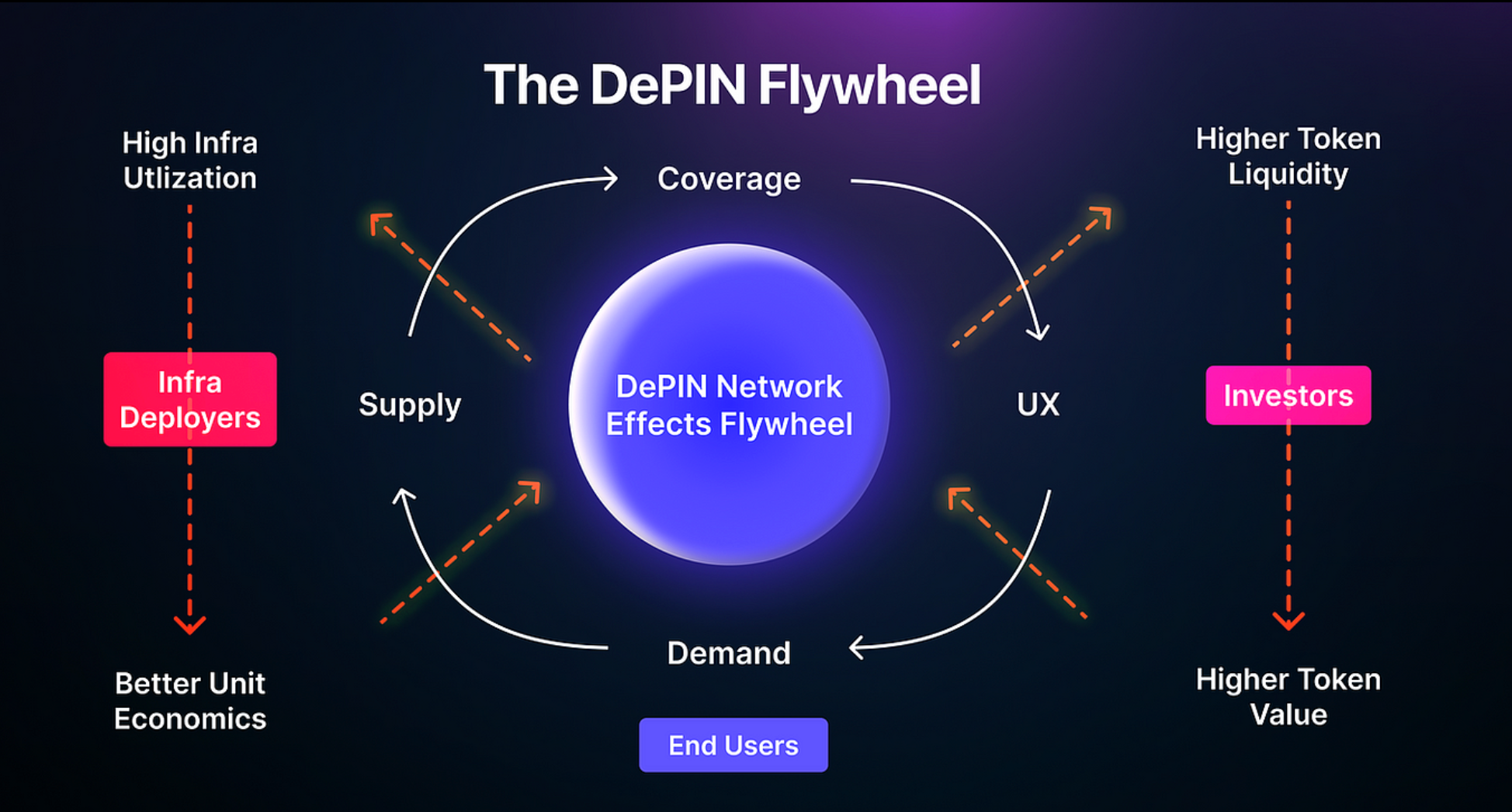
Micro Quorums: Precision Consensus in Decentralized AI Networks
Perceptron Network micro quorums represent a breakthrough in efficiency. Traditional blockchains rely on massive quorums for consensus, bogging down speed. Micro quorums deploy small, dynamic subsets of decentralized AI networks verifiers - often a dozen nodes - to rapidly assess data integrity. These groups form ad hoc, dissolve post-vote, and rotate participants to prevent collusion.
Imagine validating a real-world observation: a quorum cross-checks it against sensors, human reports, and historical patterns. Contradictions trigger AI DePIN contradiction budgets, allocated resources for deeper arbitration. This mirrors options trading's volatility hedging; here, we master data volatility with calibrated risk pools. Epoch 3 acceleration in Perceptron amps this up, slashing latency while boosting accuracy.
Centralized AI's Fragile Foundation Versus DePIN Resilience
Centralized AI thrives on scale but crumbles under scrutiny. Data funnels through proprietary silos, amplifying echo chambers and hallucinations. A single breach or algorithmic tweak cascades failures network-wide. Perceptron's model counters with transparency: every datum traces through verifiable quorums, empowering decentralized AI compute truth negotiation.
Consider LLM finetuning pipelines like those extended by Ray on Hopsworks; they scale vertically, but Perceptron scales horizontally via user nodes. Distributed validation echoes content-based networking schemes, routing truth efficiently. In my view, this isn't just incremental; it's a paradigm pivot. Centralized titans may dominate headlines, yet DePIN's micro quorums quietly forge antifragile intelligence, rewarding participants and outpacing siloed rivals in adaptability.
Volatility in data streams parallels the swings I navigate in derivatives markets - unpredictable yet harnessable. Centralized AI treats discrepancies as noise to filter out, often discarding valuable edge cases. Perceptron Network, however, budgets for them through AI DePIN contradiction budgets. These are pre-allocated compute and token pools that activate during disputes, funding escalated quorums or oracle pulls without halting the network. It's a sophisticated risk management layer, ensuring truth emerges even from conflicting signals.
This mechanism shines in high-stakes scenarios, like real-time event verification. A flurry of user-submitted footage from a breaking news event gets sliced into micro quorums. Verifiers score inputs on provenance, consistency, and cross-corroboration. Low-confidence outputs recycle into contradiction budgets for refinement, yielding outputs far more resilient than a centralized model's probabilistic guesswork.
Epoch 3 Acceleration: Turbocharging Perceptron Network Verifiers
Epoch 3 acceleration Perceptron marks the network's latest upgrade, compressing validation cycles from minutes to seconds. By optimizing verifier selection algorithms - drawing from swarm intelligence research - it prioritizes high-reputation nodes while maintaining decentralization. This isn't mere speed; it's compounded accuracy. Each epoch refines the global truth model, much like iterative options pricing converges on fair value amid market noise.
Decentralized AI networks verifiers now operate in overlapping shards, sharing partial proofs to minimize redundancy. Idle GPUs and CPUs from over 700,000 nodes kick in dynamically, scaling with demand. The result? A compute fabric that flexes for LLM finetuning or agentic workflows, outstripping rigid cloud monopolies in both cost and adaptability.
Comparison of Perceptron Micro Quorums vs Centralized AI Validation
| Aspect | Micro Quorums | Centralized |
|---|---|---|
| Speed | Seconds | Hours |
| Cost | Token rewards | Enterprise fees |
| Bias Risk | Low via rotation | High in silos |
| Scalability | 700k+ nodes | Vertical limits |
| Truth Mechanism | Quorum votes and budgets | Black-box models |
Glance at that table, and the edge becomes clear. Micro quorums don't just validate; they evolve the network's collective intelligence. In practice, this powers applications from autonomous agents negotiating predictions - think Nuklai-Truth integrations - to DePIN-hosted model training pipelines rivaling Hopsworks setups but without vendor lock-in.
I've traded through black swan events where centralized oracles failed spectacularly. Perceptron's design anticipates such chaos, distributing trust across micro quorums that self-heal. Contradiction budgets act as my volatility buffers, absorbing shocks while preserving upside. For builders eyeing decentralized AI compute truth negotiation, this is the infrastructure to bet on - tamper-proof, incentivized, and poised for explosive growth.
The fusion of human intuition, edge compute, and quorum consensus crafts an AI ecosystem that's not only smarter but fairer. As Epoch 3 rolls out, expect Perceptron to redefine how we forge reliable intelligence at scale. Participants earn while fortifying the backbone of tomorrow's models, bridging the gap between crypto incentives and AI ambition in ways centralized giants can't match.




No comments yet. Be the first to share your thoughts!