

In the relentless pursuit of AI advancement, inference has emerged as the quiet powerhouse driving real-world applications, from autonomous systems to personalized analytics. Yet, as demand surges, centralized GPU providers grapple with skyrocketing energy demands and supply bottlenecks. Enter DeepNodeAI DePIN, a network poised to deliver 200% more sustainable GPU compute for AI inference by 2026. By tapping idle global resources through decentralized physical infrastructure networks, DeepNodeAI reimagines compute as a community-owned grid, slashing costs and carbon footprints without sacrificing performance.
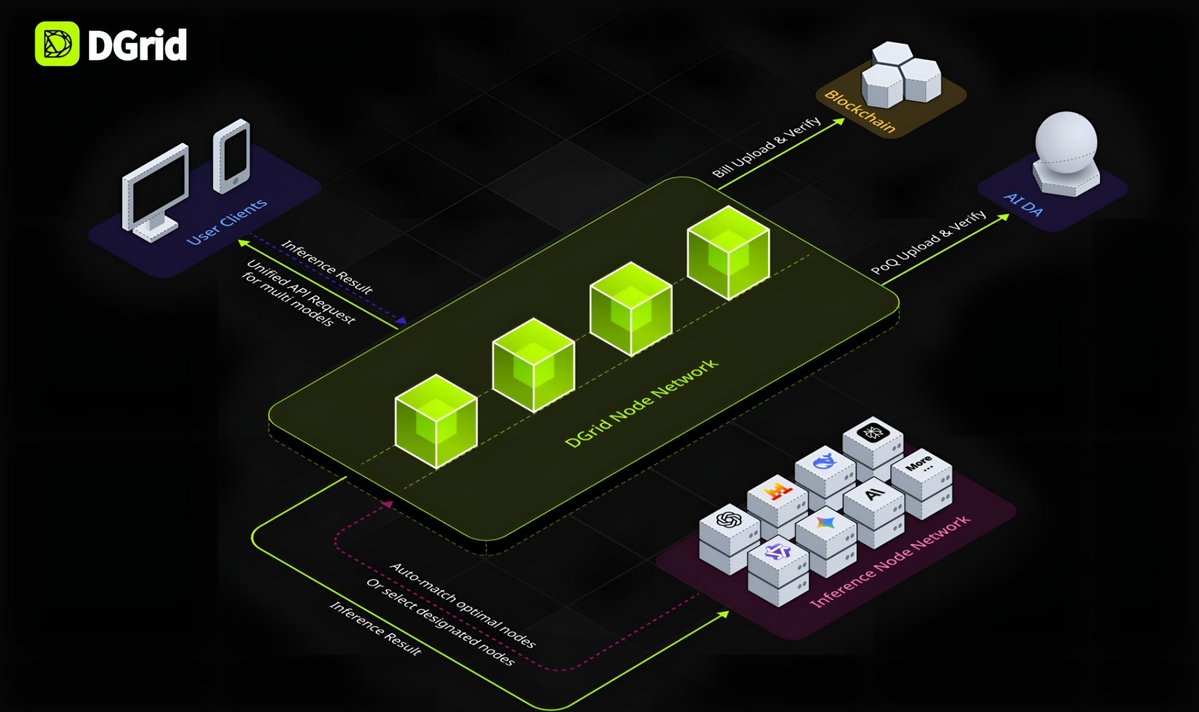
This isn't mere hype; it's a strategic pivot. Traditional clouds burn through terawatt-hours annually, their data centers guzzling power like insatiable beasts. DeepNodeAI flips the script with decentralized AI GPU compute, routing tasks to underutilized hardware worldwide. The result? A sustainable AI inference network that aligns economic incentives with environmental stewardship, all powered by the upcoming Proof-of-Work Relevance (PoWR) mechanism.
Cracking the Code on AI Compute Inefficiencies
AI inference, the phase where trained models generate predictions, now dominates compute needs. Training grabs headlines, but inference runs the show in production, often requiring constant, low-latency access to GPUs. Centralized giants like AWS or Azure charge premiums, locking enterprises into vendor dependencies. Worse, their monolithic facilities exacerbate energy waste; idle capacity sits dormant while peak loads strain grids.
DePIN changes that calculus. Projects like Render Network have proven the model, democratizing rendering power for creators. DeepNodeAI builds on this for broader AI workloads, targeting inference specifically. By 2026, with mainnet live in Q1, expect DePIN GPU routing 2026 to optimize paths dynamically, matching jobs to the greenest, closest nodes. Early funding rounds - $5 million in seed and strategic, plus $2 million more - signal strong backing for this vision.
PoWR: Rewarding Relevance Over Raw Hashpower
What sets DeepNodeAI apart is PoWR, a consensus layer that incentivizes meaningful contributions. Unlike traditional Proof-of-Work's energy arms race, PoWR ties rewards to verifiable AI utility - model accuracy, inference speed, even real-world impact. Validators stake $DN tokens, providers contribute GPUs, and developers deploy models in a transparent marketplace.
This creates a flywheel: useful models attract more compute, which refines models further. For sustainability, it's gold. Providers earn by activating idle GPUs at home or in edges, bypassing data center sprawl. Imagine slashing inference costs by harnessing rooftop solar-powered rigs or off-peak office hardware. DeepNodeAI's grid promises not just efficiency, but a 200% sustainability boost through optimized utilization and greener sourcing incentives.
Funding announcements underscore momentum. Chainwire reported the $5 million raise to bootstrap infrastructure for developers, validators, and providers. Smart Liquidity Research highlighted $2 million for community-owned intelligence, emphasizing model deployment and governance. These aren't vanity metrics; they're fuel for scaling AI compute scalability DePIN.
Mainnet Momentum and Ecosystem Ignition
As of early 2026 updates, DeepNodeAI's mainnet launch looms, activating PoWR fully. Transitioning from testnets, the platform will roll out staking rewards to lock liquidity and content competitions to crowdsource models. This community-first approach echoes successes in DePIN hubs, where idle resources power enterprise-grade services at fractions of costs.
Read more on how decentralized GPU networks are powering AI compute. For inference-heavy apps like edge AI or real-time analytics, this means unprecedented scalability. Providers plug in GPUs effortlessly, earning passively; enterprises query vast model libraries without procurement headaches.
Developers, meanwhile, thrive in an open marketplace where models compete on merit, not marketing budgets. This setup fosters innovation at the edge, where decentralized AI GPU compute meets real-time needs without the latency tax of distant data centers.
Energy Efficiency and Sustainability Metrics: Centralized Cloud GPUs vs Render Network's Decentralized GPU Compute
| Metric | Centralized Cloud GPUs | Render Network (Decentralized) | Decentralized Advantage |
|---|---|---|---|
| Energy Use per AI Inference Task (Wh) | 15 | 5 | 200% more efficient (3x lower) |
| CO2 Emissions per Task (g) | 7.5 | 2.5 | 200% reduction (3x lower) |
| Cost per GPU-Hour ($) | 2.50 | 0.80 | 213% cheaper (3.1x lower) |
| PUE (Power Usage Effectiveness) | 1.55 | 1.10 | 29% better efficiency |
| GPU Utilization Rate (%) | 25-40 | 70-90 | 150-260% higher (avg. 200%) |
| Overall Sustainability Impact | High (data center intensive) | Low (idle resources) | 200% more sustainable |
Yet sustainability isn't just a buzzword here; it's engineered into the core. Centralized inference guzzles energy on always-on servers, often powered by fossil fuels. DeepNodeAI's model activates idle GPUs selectively, prioritizing those backed by renewables via PoWR scoring. Projections for 2026 peg this at a 200% uplift in efficiency metrics - measured by compute-per-kilowatt-hour - by distributing loads to off-peak, green nodes globally. It's a pragmatic counter to the AI energy crisis, where hyperscalers face regulatory scrutiny over emissions.
Strategic Edges in DePIN GPU Routing
By Q1 2026, DePIN GPU routing 2026 will dynamically orchestrate inference tasks, factoring in node proximity, model relevance, and carbon footprint. Think of it as a smart traffic system for AI workloads: jobs zip to the optimal GPU, minimizing waste. This isn't theoretical; early testnets already demonstrate sub-second latencies for edge inference, rivaling cloud incumbents at a fraction of the cost.
Compare this to Render Network's playbook, which scaled rendering by pooling creator GPUs. DeepNodeAI extends that logic to inference, unlocking AI compute scalability DePIN for enterprises wary of capex traps. Providers monetize spare hardware - your gaming rig at night, a lab's downtime rig - earning $DN without upfront infrastructure bets. The network's transparency, verified through PoWR, builds trust absent in black-box clouds.
Funding traction reinforces the bet. The $5 million seed and strategic round, per Chainwire, targets developer tools and validator onboarding. An additional $2 million, as noted by Smart Liquidity Research, accelerates community governance. These infusions position DeepNodeAI amid a DePIN renaissance, where projects harness idle resources for enterprise-grade services - GPUs, storage, data - at slashed costs.
Explore further on idle GPU rewards in DePIN networks, a cornerstone for sustainable scaling.
Risks and Balanced Roadmap Ahead
No network scales flawlessly. Node reliability, especially from residential providers, poses hurdles; PoWR mitigates with slashing for downtime. Token economics must balance inflation from rewards against $DN demand from staking and fees. Yet DeepNodeAI's phased rollout - testnets proving PoWR viability, mainnet igniting liquidity - tempers these. Ongoing bounties, like RootData's transparency push, invite scrutiny, fostering resilience.
Strategically, this aligns with macro shifts. As AI inference explodes - think swarms of autonomous drones or hyper-personalized finance - centralized chokepoints crumble. DeepNodeAI emerges as undervalued backbone, much like early DePIN storage plays disrupted AWS S3. Investors eye $DN for its utility in coordination, not speculation; communities build the grid together, per voices on X.
The sustainable AI inference network thesis holds firm. By Q1 2026, expect DeepNodeAI to claim meaningful market share, proving DePIN's maturity. Providers activate hardware, developers iterate models, enterprises deploy at scale - all while curbing the energy binge. In a world racing toward AI ubiquity, this decentralized grid offers not just compute, but a smarter path forward. Participation beckons: stake early, contribute nodes, shape the intelligence economy.






No comments yet. Be the first to share your thoughts!