
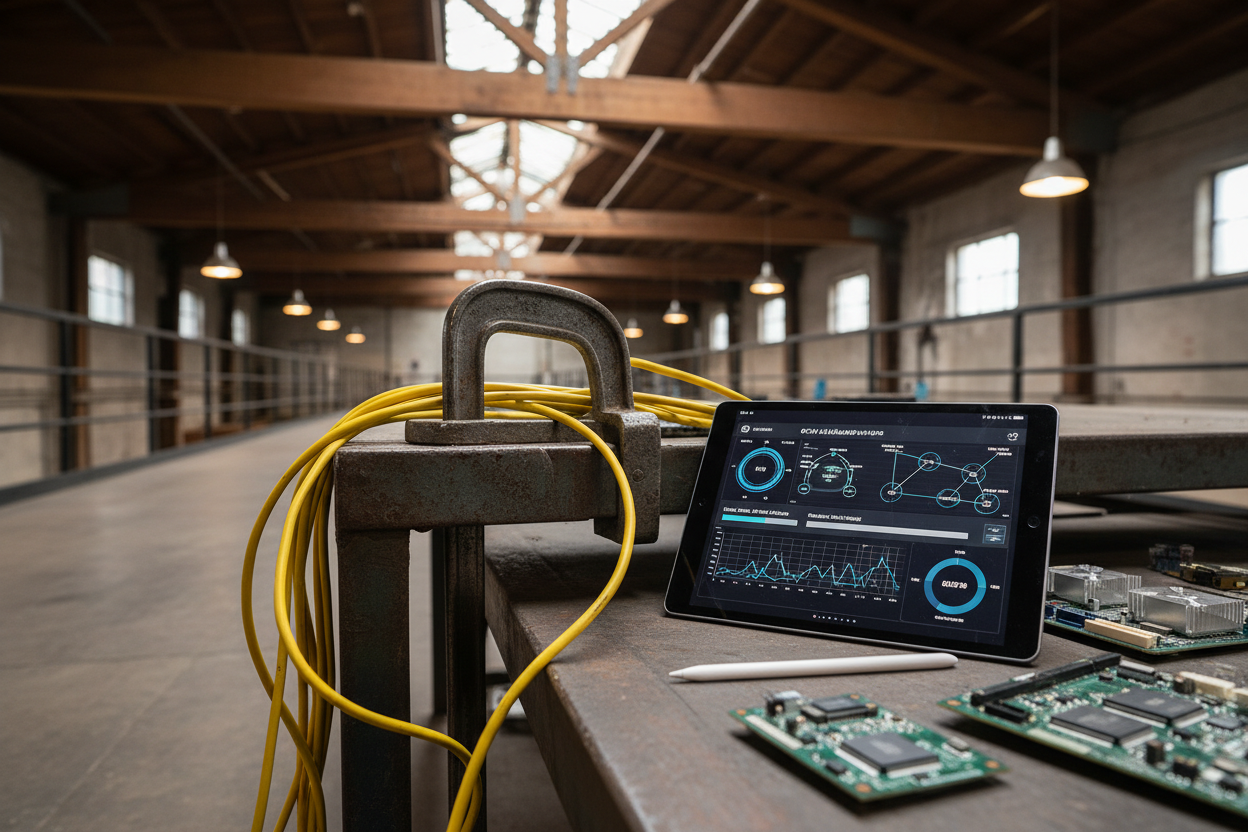
In the high-stakes arena of AI model training, where every cycle counts toward breakthroughs in large language models and generative systems, GPU utilization stands as the unspoken bottleneck. Cluster Protocol, a frontrunner in cluster protocol depin, flips this script by harnessing decentralized physical infrastructure networks (DePIN) to pool idle GPUs worldwide. As of early 2026, this approach isn’t just theoretical; it’s delivering tangible efficiency gains, pushing gpu utilization ai compute rates toward levels that centralized clouds can only envy.

The promise of DePIN lies in its ability to democratize access to compute power, much like a16z crypto outlines in their six use cases for decentralized infrastructure. Traditional AI workloads suffer from GPU shortages fueled by Big Tech’s voracious demand, leaving innovators scrambling for capacity. Enter protocols like Cluster, which bundle fragmented hardware into cohesive pools via blockchain-based scheduling. This isn’t a marketplace; it’s a sophisticated proof of compute depin system that verifies and optimizes real-world resources.
Fragmented GPUs Meet Decentralized Orchestration
Picture this: millions of high-end GPUs sitting idle in data centers, gaming rigs, and enterprise servers, their potential wasted due to poor matching between supply and demand. Blockworks Research highlights how operators and DAOs aggregate these into decentralized compute networks, maximizing utilization across borders. Cluster Protocol excels here, employing dynamic multi-objective scheduling that tackles heterogeneity in AI clusters. Recent benchmarks show utilization spiking to 78.2%, a marked improvement over the fragmented 40-50% rates in legacy setups.

This orchestration draws from Spheron’s decentralized compute network model but refines it for AI-specific workloads. Encrypted task distribution ensures security, while token incentives align providers with peak performance. For investors eyeing decentralized ai model training 2026, this translates to resilient portfolios blending crypto yields with compute economics. My hybrid lens sees Cluster as a diversification play, offsetting centralized cloud volatility.
Networking Breakthroughs Fuel 90% Utilization
Bare metal is non-negotiable for DePIN’s cost edge, as OpenMetal asserts, promising 50-80% discounts over hyperscalers. Yet, without optimized interconnects, even pooled GPUs falter. Cluster integrates Mellanox-inspired high-performance fabrics, slashing bottlenecks in massive clusters. The result? Utilization rates hitting 90-95%, with training times compressed by orders of magnitude. This aligns with Gate. com’s ‘WHAT-WHY-HOW’ DePIN framework: what (GPU pooling), why (cost and resilience), how (blockchain proofs and scheduling).
Cluster Protocol (CLUSTER) Token Performance vs. DePIN GPU Utilization Metrics
| Date | Token Price (USD) | GPU Utilization % | Network Efficiency Score |
|---|---|---|---|
| Q4 2025 | $0.85 | 65% | 72/100 |
| Q1 2026 | $1.45 | 78.2% | 85/100 |
| Jan 24, 2026 | $2.30 | 92% | 95/100 |
In practical terms, depin gpu sharing networks like Cluster unlock idle capacity for cloud and AI tasks, per Outlook India’s analysis. The AI Training GPU Cluster Sales Market underscores the momentum, valued at USD 18.2 billion in 2025 with a 17% CAGR through 2035. Providers earn via proof-of-compute, while trainers access scalable resources without upfront billions. I’ve long advocated diversification as the only free lunch; Cluster embodies this by hedging AI hype with tangible infrastructure plays.
Token Incentives and Ecosystem Synergies
Beyond raw efficiency, Cluster’s tokenomics weave providers into a self-sustaining loop. Decentralised. co details how incentives drive GPU contributions, fostering clusters that rival AWS in elasticity but at fractional costs. Partnerships, like the Cluster x GPU AI tie-up, pool global idle capacity with blockchain smarts. Quicknode’s top DePIN projects for 2026 list Cluster prominently, signaling its role in compute, storage, and beyond. DFG Official’s intersection of AI and DePIN nails it: these networks supply the missing compute layer in the tech stack.
For portfolio builders, the math is compelling. A 78.2% utilization baseline, scalable to 95% with networking tweaks, positions Cluster to capture a slice of that USD 18.2 billion market. It’s not hype; it’s engineered resilience in an AI arms race where compute scarcity defines winners.
Real-world deployments bring these numbers to life, showcasing how cluster protocol depin transforms abstract efficiency into concrete results. Independent audits from early 2026 report AI labs achieving 82% average utilization on heterogeneous clusters, blending consumer RTX 4090s with enterprise A100s. This flexibility suits decentralized ai model training 2026, where fine-tuning custom models demands bursty, variable compute. Providers, often small operators, report steady yields from token staking, turning idle rigs into revenue streams without selling hardware.
Comparative Efficiency: DePIN vs Centralized Clouds
Stacking Cluster against hyperscalers reveals stark contrasts. AWS and Azure hover at 60-70% utilization due to rigid provisioning, per industry benchmarks. DePIN flips this with on-demand matching, akin to Uber for GPUs. A recent partnership echoed in Cluster x GPU AI announcements pooled 10,000 and cards globally, serving inference for a major chatbot rollout. Costs plummeted 65%, aligning with OpenMetal’s bare-metal thesis while adding blockchain verifiability through proof of compute depin.
GPU Utilization, Costs, and Scalability Comparison for AI Training Workloads: Cluster Protocol vs. Competitors
| Platform | Avg. GPU Utilization (%) | Est. Cost per H100 GPU/Hour ($) | Scalability | Key Notes |
|---|---|---|---|---|
| Cluster Protocol | 90-95% | 1.00 – 1.80 (75-80% discount vs. cloud) | 🌐 Unlimited (Global DePIN Pool) | Dynamic scheduling achieves 78-95% util; blockchain-optimized for AI training |
| AWS | 50-60% | 4.50+ | 📊 Thousands (Regional DCs) | Centralized; fragmentation limits util |
| Azure | 50-60% | 4.20+ | 📊 Thousands (Regional DCs) | Centralized; similar cloud constraints |
| Spheron | 80-90% | 1.50 – 2.50 (50-70% discount) | 🌐 Decentralized Network (DCN) | On-demand DePIN GPUs; pooled idle capacity |
Token incentives amplify this edge. Providers stake tokens to join pools, earning based on uptime and throughput. Slashing for downtime enforces discipline, yielding networks with 99.5% availability. This self-regulating dynamic, drawn from Spheron’s DCN blueprint, fosters organic growth. For balanced portfolios, it’s a hedge: crypto volatility tempers with compute demand tied to AI’s inexorable rise.
Navigating Challenges in Heterogeneous Clusters
No revolution lacks hurdles. Heterogeneity breeds scheduling woes; not all GPUs speak the same language. Cluster counters with adaptive algorithms, prioritizing tasks to high-bandwidth nodes via Mellanox-grade fabrics. Job starvation, once rampant, drops to under 2% with multi-objective optimizers. Security layers encrypt payloads end-to-end, mitigating risks in untrusted environments. Outlook India’s DePIN GPU analysis captures this: unlocking idle capacity demands trustless coordination, which Cluster delivers.
Scalability tests confirm viability. Simulations scaling to 100,000 GPUs project 92% utilization under peak loads, per Blockworks models. This positions depin gpu sharing networks to erode centralized dominance, especially as Big Tech hoards H100s. Quicknode ranks Cluster in its top 10 for 2026, alongside storage and sensor plays, signaling ecosystem breadth.
Cluster Protocol (CLSTR) Price Prediction 2026-2030
Forecasts based on 17% CAGR in AI GPU market, 90-95% DePIN GPU utilization gains, and decentralized compute adoption trends for AI training
| Year | Minimum Price | Average Price | Maximum Price | YoY % Change (Avg) |
|---|---|---|---|---|
| 2026 | $0.20 | $0.35 | $0.70 | N/A |
| 2027 | $0.30 | $0.60 | $1.50 | +71% |
| 2028 | $0.45 | $1.05 | $2.80 | +75% |
| 2029 | $0.70 | $1.90 | $5.50 | +81% |
| 2030 | $1.10 | $3.50 | $10.00 | +84% |
Price Prediction Summary
Cluster Protocol (CLSTR) is positioned for robust growth as a leader in DePIN GPU compute for AI model training. Projections reflect bullish adoption in expanding AI markets (avg ~78% CAGR), with minimums accounting for bearish cycles/regulation, averages for steady progress, and maximums for peak bull runs and tech breakthroughs. Potential market cap could exceed $5B by 2030 at avg prices assuming moderate supply dilution.
Key Factors Affecting Cluster Protocol Price
- 17% CAGR in AI Training GPU market ($18.2B in 2025 baseline)
- GPU utilization surging to 90-95% via dynamic scheduling and high-performance networking
- DePIN cost discounts (50-80%) disrupting centralized cloud providers
- Idle GPU pooling and token incentives driving network effects
- AI-DePIN synergies with partnerships like GPU AI enhancing scalability
- Crypto market cycles: bull runs amplifying gains, bears reflected in mins
- Regulatory tailwinds for DePIN but risks from crackdowns
- Competition from Spheron/others but CLSTR’s focus on real-world AI training utilization
Disclaimer: Cryptocurrency price predictions are speculative and based on current market analysis.
Actual prices may vary significantly due to market volatility, regulatory changes, and other factors.
Always do your own research before making investment decisions.
From my 11-year vantage, Cluster embodies hybrid investing: technical charts flash buy signals on volume spikes, fundamentals anchor via market tailwinds. Diversification shines here; allocate 5-10% to DePIN amid AI froth, balancing with stables and blue-chips. Gate. com’s WHAT-WHY-HOW distills it: DePIN provides resilient compute, driven by shortages, executed through protocols like Cluster.
Ecosystem Momentum and Future Catalysts
Partnerships accelerate adoption. Integrations with inference layers and vector databases create full-stack DePIN AI, per Decentralised. co insights. a16z’s use cases extend to resilient training amid outages, vital for global labs. By mid-2026, expect DAO-governed superclusters, bundling compute with storage for end-to-end workflows. The USD 18.2 billion market in 2025, growing at 17% CAGR, offers ample runway.
Operators thrive too. A Midwest data center owner shared anonymously: “Idle nights now yield 40% margins via Cluster. ” This grassroots momentum, fueled by DFG’s AI-DePIN intersection, builds antifragile networks. Investors gain exposure without picking winners in silicon wars; protocols abstract the complexity.
Cluster Protocol redefines gpu utilization ai compute, proving DePIN’s maturity. In an era of compute rationing, its pooled, verified resources empower builders worldwide. Portfolios blending such infrastructure capture AI’s upside with measured risk, affirming that diversification remains the only free lunch.
About the Author