
Decentralized Physical Infrastructure Networks (DePIN) are flipping the script on AI compute costs, with capex-light models delivering payback periods under two years. Providers sidestep massive upfront hardware investments by tapping idle GPUs worldwide, fueling a surge in decentralized AI compute for 2026. Messari’s State of DePIN 2025 report underscores this shift: despite a $10 billion sector market cap plunging over 90% from peaks, onchain revenues hit $72 million, and funding soared to an all-time high of $1 billion, mostly at seed and Series A stages. This resilience signals maturation, as revenue-generating networks like those in AI compute outpace speculative hype.
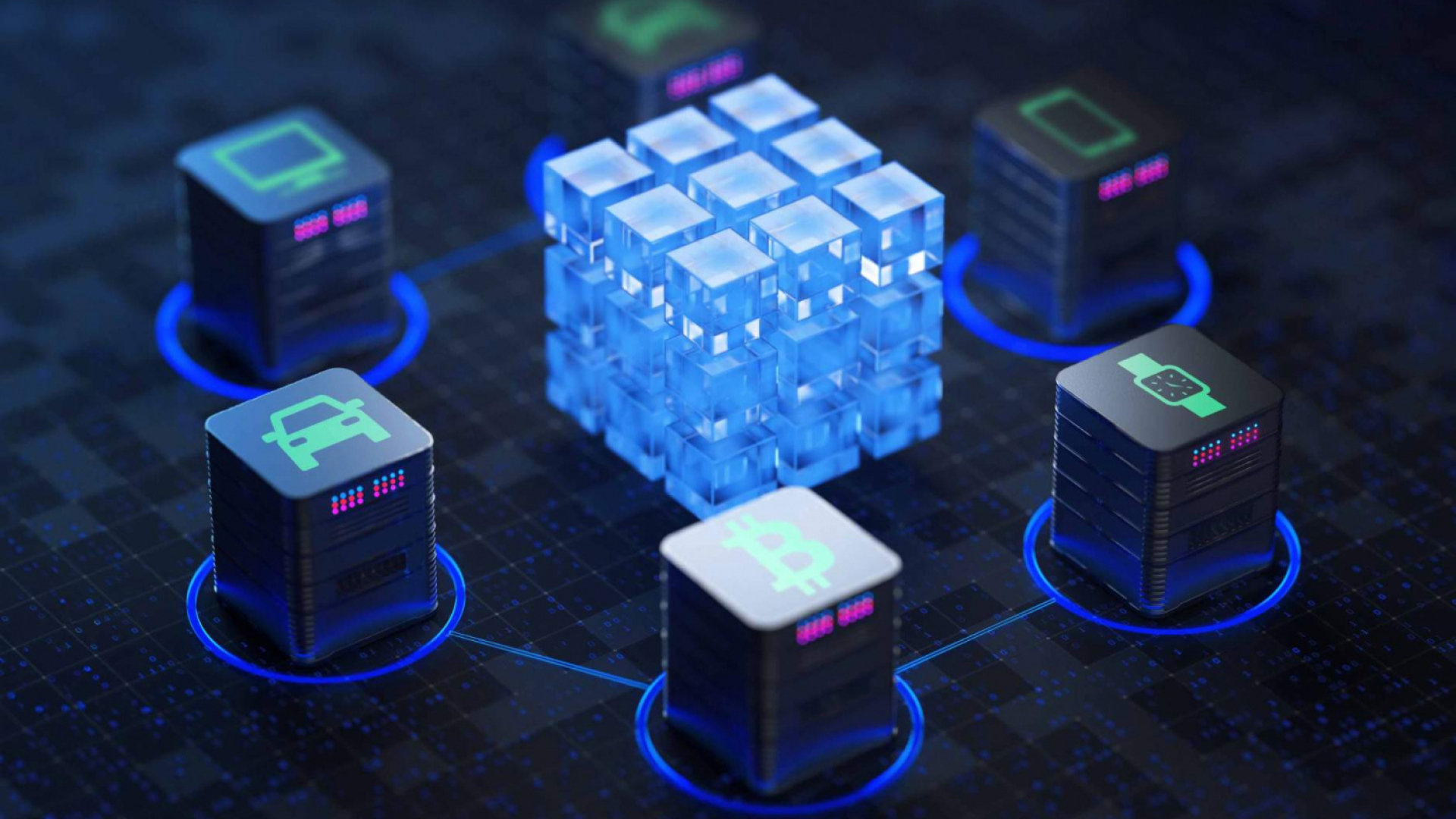
These networks aren’t just surviving; they’re thriving by aligning incentives through low-inflation tokenomics and stablecoin yields on DePIN infra. Projects optimize decentralized GPU financing, turning consumer-grade hardware into profitable nodes. Investors take note: DePIN revenue multiples in AI are compressing toward sustainable levels, rewarding efficiency over extravagance.
DePIN’s 2025 Snapshot: Revenue Growth Defies Token Slumps
Messari’s comprehensive 59-page analysis paints a clear picture. While broad DePIN prices tanked, a core group of AI-focused networks expanded onchain activity. Total sector revenues climbed amid declining valuations, highlighting capex-light DePIN as the differentiator. Funding influxes poured into early-stage ventures, betting on AI and DePIN convergence outlined in Messari’s Crypto Theses 2026. Key sections on AI and DePIN forecast structural shifts: blockchain enabling distributed data and compute at fractions of hyperscaler costs.
This data-driven rebound positions DePIN AI compute 2026 as an overlooked powerhouse. Networks matured from token-launch frenzies to utility-driven platforms, with sophisticated capital raises fueling hardware deployments. Stablecoin yield DePIN infra emerged as a stabilizer, offering suppliers predictable returns decoupled from volatile tokens.
Capex-Light Mechanics: Minimizing Upfront Costs for Maximum Scale
Traditional AI compute demands billions in capex for data centers, locking enterprises into rigid contracts. Capex-light DePIN flips this by crowdsourcing supply: node operators contribute existing or affordably acquired GPUs, earning via token emissions tied to demand. Low inflation DePIN networks like io. net use dynamic engines to calibrate rewards, preventing oversupply gluts.
This model slashes barriers. Suppliers finance gear through phased leasing or outright purchases with sub-two-year ROIs, while users access compute at 50-80% below cloud giants. Blockchain verifies contributions transparently, fostering trust in decentralized GPU financing. Result? Scalable AI training and inference without centralized chokepoints.
Leaders Delivering Under-Two-Year Payback Realities
io. net exemplifies execution. Since June 2025, it processed over $20 million in compute leases, catering to AI workloads from training to inference. Its Incentive Dynamic Engine (IDE) real-time adjusts token emissions, balancing supplier stability with user affordability. This capex-light approach has bootstrapped a vast GPU pool without proprietary hardware fleets.
Aethir pushes further, deploying over 3,000 high-end GPUs across cloud gaming, AI, and edge use cases. Annual recurring revenue exceeds $36 million, with Aethir Edge devices at $1,299 each yielding payback in roughly six months. Operators plug in, contribute compute, and recoup costs swiftly, scaling via community momentum.
Kaisar Network complements with blockchain-orchestrated distributed GPUs, honing AI model efficiency. These projects collectively prove DePIN revenue multiples AI can rival Web2 infra, minus the capex drag. Suppliers capture value through proven economics, drawing more hardware online for 2026’s AI boom.
These leaders aren’t outliers; they’re the vanguard of DePIN AI compute 2026. By prioritizing supplier economics, they unlock latent GPU capacity that hyperscalers can’t touch. Imagine: a global network where your gaming rig doubles as an AI inference node, financed through transparent, demand-driven rewards. This isn’t hype; it’s mechanics backed by $72 million in sector revenues and $1 billion in targeted funding.
Payback Breakdown: Numbers That Stack Up for Node Operators
Let’s crunch the incentives. For Aethir Edge at $1,299, operators report average daily earnings of $6-10 from AI and gaming leases, factoring in electricity at $0.15/kWh. That’s $180-300 monthly per device, recouping costs in 4-7 months under peak demand. io. net suppliers see similar velocity: a mid-tier RTX 4090 GPU leases for $0.50-1.00/hour, yielding $300-600/month after costs. Kaisar optimizes further with smart matching algorithms, boosting utilization 20-30% over peers.
Contrast this with centralized clouds: AWS pcharges $3-5/hour for equivalent H100s, but DePIN undercuts at 60-80% less while offering decentralized GPU financing options like phased token loans. Low barriers breed density; networks hit critical mass faster, compressing DePIN revenue multiples AI to 10-15x forward sales, competitive with mature SaaS.
Stablecoin yield DePIN infra adds ballast. Projects like these integrate USDC or USDT payouts, shielding operators from token volatility. io. net’s IDE dynamically throttles emissions when supply outpaces jobs, maintaining 70-90% node uptime. Result: predictable cash flows that lure sidelined hardware owners, expanding the pool exponentially.
Risks and Resilience: What Holds DePIN Back?
No revolution skips potholes. Hardware heterogeneity challenges seamless workloads; not every consumer GPU handles enterprise LLMs. Yet leaders mitigate via software layers: io. net’s worker verification ensures quality, while Aethir’s containerization standardizes outputs. Regulatory fog around energy use looms, but capex-light models distribute footprint, dodging single-site scrutiny.
Token economics demand vigilance. High emissions risk dilution, but low inflation DePIN networks cap supplies post-genesis, vesting teams heavily. Messari notes sophisticated Seed/Series A rounds enforce milestones, aligning VCs with bootstrapped growth. Onchain revenues prove traction: $72 million in 2025 signals product-market fit, not pump-and-dump.
Operators hedge smartly too. Diversify across jobs – gaming for steady volume, AI spikes for premiums. Monitor IDE dashboards for emission forecasts; stack stablecoin yields during lulls. This operator mindset turns DePIN into asymmetric bets: low downside from cheap entry, uncapped upside as AI demand balloons.
io.net (IO) Price Prediction 2027-2032
Projections based on DePIN sector growth, AI compute demand, and Messari 2025/2026 analyses amid market recovery
| Year | Minimum Price (USD) | Average Price (USD) | Maximum Price (USD) | YoY % Change (Avg)* |
|---|---|---|---|---|
| 2027 | $0.90 | $1.90 | $4.20 | +27% |
| 2028 | $1.40 | $3.20 | $7.00 | +68% |
| 2029 | $2.00 | $5.00 | $11.00 | +56% |
| 2030 | $2.80 | $7.50 | $16.00 | +50% |
| 2031 | $3.50 | $10.50 | $22.00 | +40% |
| 2032 | $4.50 | $14.00 | $30.00 | +33% |
Price Prediction Summary
io.net (IO) is positioned for strong growth through 2032, driven by decentralized AI compute demand and DePIN maturation. Average prices projected to rise from $1.90 in 2027 to $14.00 in 2032, with bullish maxima reflecting $1B+ sector funding and revenue milestones; minima account for market cycles and competition.
Key Factors Affecting io.net Price
- Explosive AI compute demand with $20M+ leases processed
- DePIN revenue growth despite 2025 price declines (Messari)
- $1B funding in 2025 signaling investor confidence
- Capex-light models enabling <2-year payback
- AI-DePIN intersection and global GPU deployment
- Regulatory clarity and broader crypto bull cycles
- Competition from Aethir/KAISAR but first-mover advantages
Disclaimer: Cryptocurrency price predictions are speculative and based on current market analysis.
Actual prices may vary significantly due to market volatility, regulatory changes, and other factors.
Always do your own research before making investment decisions.
2026 Outlook: Scaling to Hyperscaler Disruption
Messari’s Theses 2026 spotlights AI-DePIN fusion as transformative. Expect inference dominance first – lighter workloads suit spotty consumer GPUs – then training as HBM-equipped nodes proliferate. Funding momentum sustains: $1 billion in 2025 bought deployments; 2026 channels to software polish and enterprise ramps.
Revenue multiples tighten as proofs accumulate. Aethir’s $36 million ARR on 3,000 GPUs extrapolates to $100 million at 8,000 units, plausible with community scaling. io. net’s $20 million leases since June pace toward $100 million annualized. Kaisar carves inference niche, partnering for custom models.
For strategists, DePIN offers options-like convexity. Suppliers gain levered exposure to AI growth sans capex drag; users lock flexible compute. Networks with IDE-like stabilizers command premiums, rewarding early positioning. As hyperscalers grapple $100 billion and buildouts, DePIN slips in via edges: edge AI, sovereign clouds, volatility-proof infra.
Node operators, start small: benchmark your rig on testnets, layer stablecoin hedges. Builders, integrate DePIN oracles for hybrid stacks. Investors, eye revenue dashboards over charts. Capex-light DePIN isn’t disrupting tomorrow; it’s compounding today, payback under two years sealing the pitch. The idle GPU in your basement? It’s 2026’s edge in the AI arms race.
About the Author