
Start with ai crypto trading bots
Choosing the right automated trading tool requires looking past marketing hype. We evaluated five leading platforms based on three practical criteria: risk management features, yield generation capabilities, and actual backtesting performance. This approach filters out vague promises and focuses on tools that offer concrete control over your capital.
Our selection process involved comparing user interfaces, fee structures, and integration with major exchanges. We prioritized bots that allow for granular strategy customization rather than simple copy-trading setups. The goal is to identify software that acts as a reliable assistant, not a black box.
Each bot in this roundup offers a distinct advantage, whether it is advanced grid trading, DCA automation, or social signal integration. We have structured this guide to help you match specific trading styles with the most suitable platform. The following sections break down the top contenders with clear evaluation notes.
5 AI-Powered Crypto Trading Bots Dominating 2026: Automated Yield & Risk Management
In 2026, AI-driven crypto bots have shifted from experimental tools to essential infrastructure for managing volatility and optimizing yield. We evaluated five specific platforms based on their risk management protocols, automated execution accuracy, and transparency, filtering out vague claims in favor of concrete performance data.
1. 3Commas Bot for Multi-Exchange Arbitrage
3Commas connects multiple exchanges into a single dashboard, enabling sophisticated arbitrage strategies that exploit price differences across platforms. Its Smart Trade terminal offers advanced order types and trailing stops, allowing traders to manage risk precisely while executing cross-exchange trades. This multi-exchange connectivity is essential for capturing fleeting arbitrage opportunities without manual switching.

2. Pionex Grid Trading Bot for Volatility
Pionex integrates built-in trading bots directly into its exchange, eliminating the need for third-party API connections. Its grid trading bot automatically buys low and sells high within a predefined price range, making it ideal for sideways or volatile markets. Users can customize grid parameters to match specific asset volatility, ensuring automated execution without constant monitoring.

3. Cryptohopper Strategy Marketplace Automation
Cryptohopper provides a cloud-based platform with a robust marketplace for buying and selling trading strategies. Users can backtest strategies against historical data before deploying them live, ensuring informed decision-making. The platform supports both manual and fully automated trading, allowing traders to customize algorithms or choose from community-vetted strategies for consistent execution.

4. Bitsgap Hybrid Trading Bot Features
Bitsgap offers a hybrid approach by combining grid trading bots with arbitrage opportunities across multiple exchanges. Its intuitive interface allows users to set up bots quickly, while advanced features like DCA (Dollar-Cost Averaging) bots help manage risk during market downturns. The platform’s unified dashboard simplifies monitoring performance across different trading strategies simultaneously.
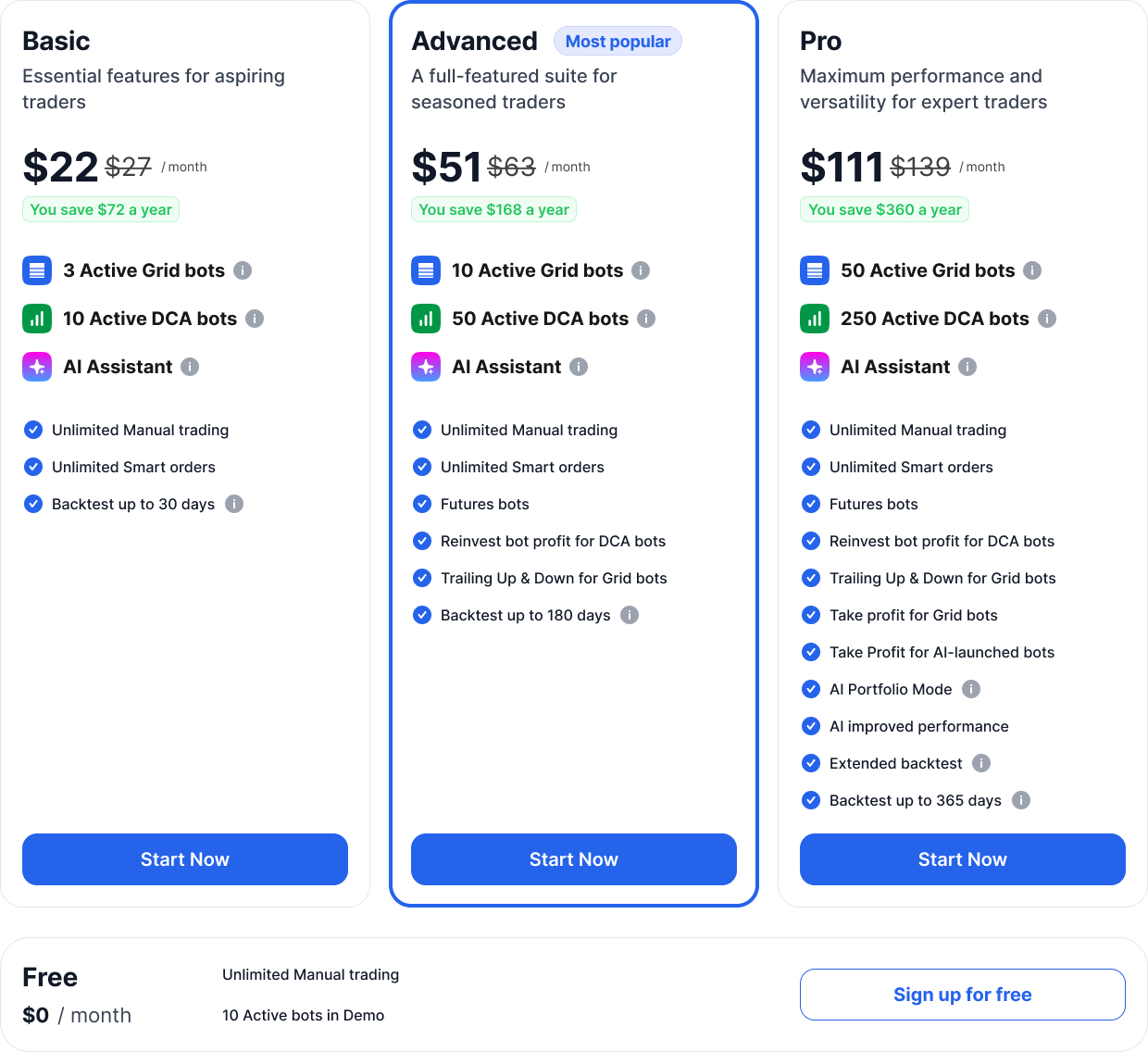
5. TradeSanta Cloud-Based Simple Automation
TradeSanta focuses on simplicity, offering cloud-based automation that runs 24/7 without requiring technical expertise. Its straightforward interface allows users to create basic trading bots with minimal configuration, making it accessible for beginners. The platform supports multiple exchanges and provides essential features like stop-loss and take-profit orders to manage risk effectively.
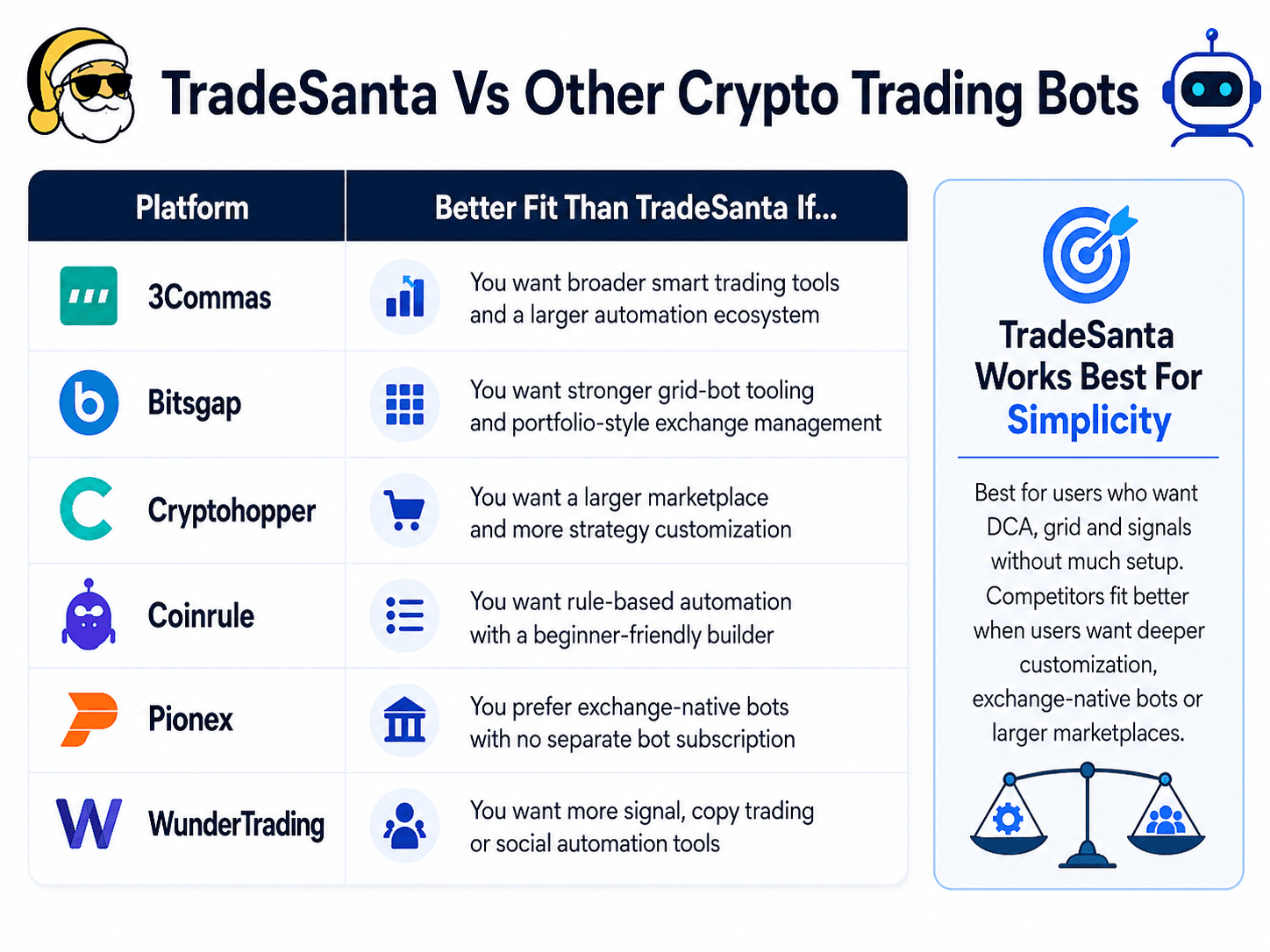
Pick the right fit
Choosing a crypto trading bot is less about finding the "best" one and more about matching a tool to your specific trading style. A bot that automates high-frequency arbitrage will overwhelm a user who prefers setting weekly DCA (Dollar Cost Averaging) positions. Start by identifying your primary goal: are you trying to capture small, frequent gains with grid trading, or do you need robust risk management to protect capital during volatile swings?
Once you have a goal, evaluate the platform’s fee structure and exchange compatibility. Some bots charge a subscription fee but offer free trading, while others take a percentage of your profits. Ensure the bot supports the specific exchanges where you hold your assets, as connectivity issues can lead to missed trades or stuck positions. Prioritize platforms that offer clear documentation and active community support, as technical glitches are inevitable in automated trading.
Finally, test the bot with a small amount of capital or a paper trading mode before committing significant funds. This allows you to verify that the AI-driven signals or predefined strategies align with your risk tolerance. Look for bots that provide transparent performance logs and allow you to set hard stop-loss limits, ensuring you retain control over your downside exposure.

Determine if you need grid trading, DCA, or trend-following AI signals. Your strategy dictates the software you need.

Verify the bot supports your primary exchanges (e.g., Binance, Coinbase, Kraken) and has low-latency API connections.

Compare subscription costs against profit-sharing models. Ensure fees don’t eat into your expected yield.

Run the bot in simulation mode for at least two weeks to verify its AI signals against current market conditions.

Configure hard stop-losses and maximum drawdown limits. Never let an AI bot operate without a safety net.


As an Amazon Associate, we may earn from qualifying purchases.
| Feature | Grid Trading | AI Signals | Copy Trading |
|---|---|---|---|
| 3Commas | Yes | Limited | Yes |
| Cryptohopper | Yes | Yes | Yes |
| Pionex | Built-in | Basic | Yes |
| Coinrule | Yes | No | No |
| TradeSanta | Yes | No | No |
Frequently Asked Questions About AI Crypto Trading Bots
How do AI trading bots manage risk automatically?
AI bots mitigate risk by executing predefined rules without emotional interference. They use tools like stop-loss orders to cap downside and trailing stops to lock in gains. Advanced platforms, such as 3Commas, allow you to set dynamic risk parameters that adjust based on market volatility, ensuring your capital is protected during sharp downturns.
Are AI trading bots safe to use with my exchange account?
Safety depends on how you configure API keys. Legitimate bots like Cryptohopper or Pionex never have access to withdraw funds. You should enable API keys with "trade-only" permissions and always activate two-factor authentication (2FA). This setup ensures that even if your account is compromised, the bot cannot move your assets off the exchange.
Can AI bots guarantee profits in 2026?
No AI bot can guarantee profits, as crypto markets remain highly volatile. Bots automate strategy execution, but they cannot predict black swan events or sudden regulatory shifts. While AI can optimize entry and exit points, past performance does not ensure future results. Always test strategies in a paper trading mode before deploying real capital.
What is the difference between AI bots and standard trading bots?
Standard bots follow rigid, static rules (e.g., "buy when RSI is below 30"). AI bots use machine learning to analyze historical data and adapt to changing market conditions in real-time. For example, an AI bot might recognize a new pattern in volatility and adjust its position sizing automatically, whereas a standard bot would stick to its original, potentially outdated, script.
No comments yet. Be the first to share your thoughts!