

Top 5 AI Crypto Trading Platforms for 2026
Automated trading has evolved from simple script execution to autonomous agents capable of real-time market analysis. In 2026, the most effective tools blend machine learning with robust risk management protocols. This list highlights five platforms that have demonstrated consistent reliability and feature depth for serious traders.
We evaluated these options based on three core criteria: backtesting accuracy, execution speed, and transparency in fee structures. We prioritized platforms that offer clear documentation and active developer communities, ensuring that users can troubleshoot and adapt strategies without relying on opaque black-box systems. While many tools promise passive income, only these five have maintained a track record of stable performance across varying market conditions.
The goal here is not to find a magic button for wealth, but to identify tools that give you a structural edge. Whether you are looking for fully managed quant strategies or granular control over your own algorithms, these selections offer the most practical starting points for integrating AI into your crypto workflow.
1. Finnhub AI Real-Time Market Data Integration
Finnhub provides institutional-grade market data APIs, serving as the foundational layer for autonomous agents that require precise, low-latency information. Its REST and WebSocket endpoints deliver real-time stock prices, company fundamentals, and alternative data sources essential for building robust trading algorithms. This integration ensures your AI agents operate on accurate, up-to-the-second market signals rather than delayed historical data.
2. TradeSanta Automated Crypto Trading Features
TradeSanta offers a user-friendly interface for setting up automated crypto strategies without requiring coding expertise. Its drag-and-drop builder allows traders to configure grid trading, DCA, and custom indicators easily. The platform supports multiple exchanges and provides a demo mode, enabling users to test strategies in a risk-free environment before deploying real capital into the volatile cryptocurrency markets.
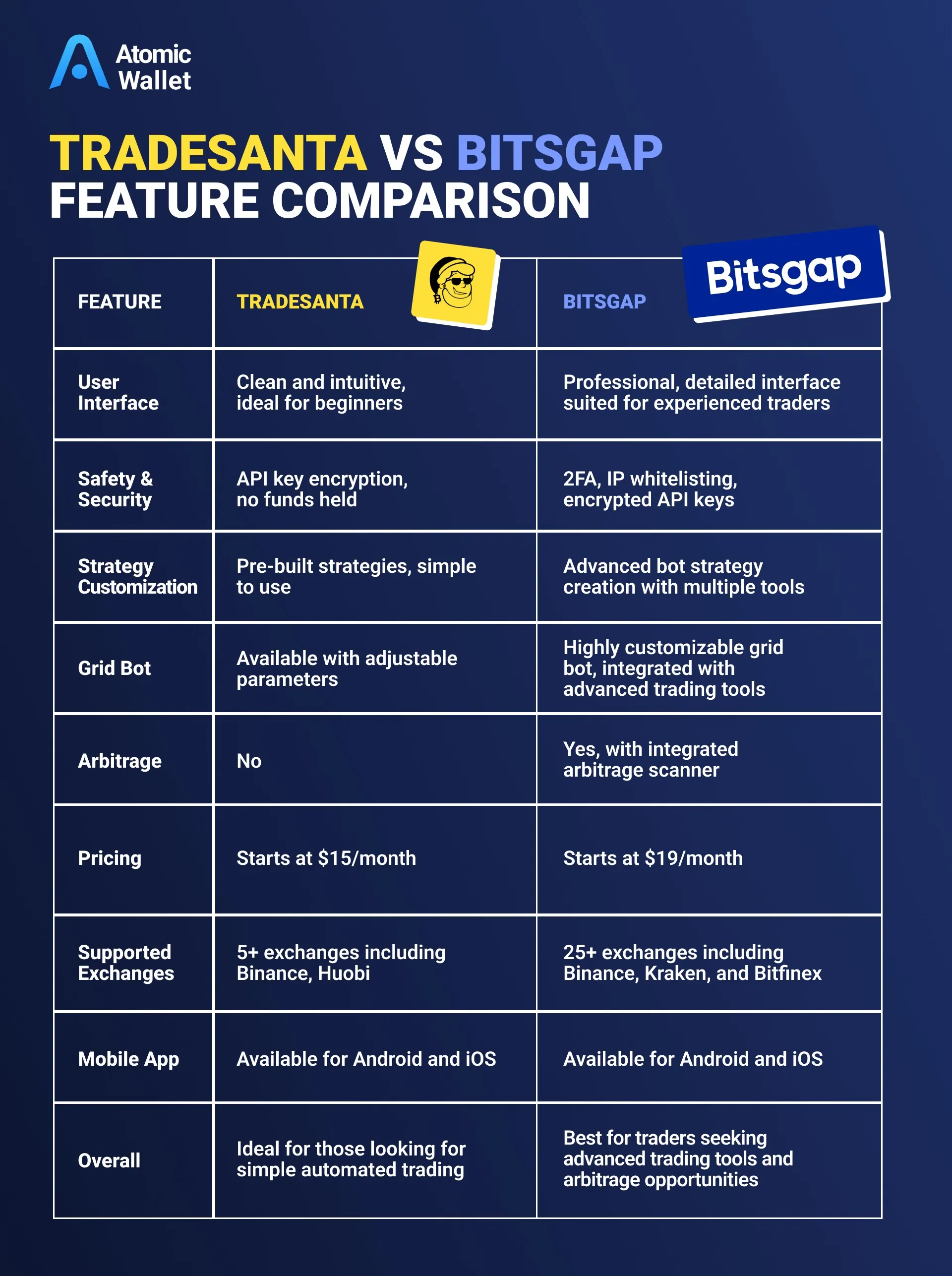
- Automated crypto trading
- No coding required
- Multiple exchange support
3. Cryptohopper Cloud-Based Algorithmic Trading Platform
Cryptohopper operates entirely in the cloud, ensuring your trading strategies run 24/7 without needing a dedicated computer or stable internet connection at home. It features a marketplace for buying and selling pre-built strategies, allowing users to leverage community-developed algorithms. The platform integrates with major exchanges and offers backtesting capabilities to validate strategy performance before live deployment.
4. 3Commas DCA Bot and Portfolio Management Tools
3Commas specializes in Dollar-Cost Averaging (DCA) bots, which help mitigate volatility by buying assets at regular intervals or specific price drops. Its terminal interface provides a comprehensive view of open orders and positions across multiple exchanges. The platform also offers smart trade terminals, limit orders, and portfolio management tools to streamline execution and monitor performance efficiently.

5. Pionex Built-In Exchange Trading Bots
Pionex is a crypto exchange with 16 built-in free trading bots, eliminating the need for third-party integrations. Features include Grid Trading, DCA, and Rebalancing bots that automate common strategies directly within the platform. This all-in-one approach simplifies the trading process, offering low fees and seamless execution without the complexity of managing API keys across different services.

How to Pick the Right Autonomous Agent
Choosing an autonomous trading agent requires matching your technical comfort and risk tolerance to the platform's capabilities. The market offers tools that range from simple grid bots to complex, self-coding agents. Before committing capital, you need to know which layer of automation fits your workflow.
1. Define your autonomy level
Do you want a bot that executes a strategy you build, or one that creates and manages strategies for you? Platforms like 3Commas offer granular control, letting you set exact entry and exit parameters. In contrast, BulkQuant operates as a fully managed quantitative service, handling the heavy lifting of strategy development and risk management. Choose the level of oversight that matches your available time.
2. Verify exchange compatibility
Not all agents support every cryptocurrency exchange. Ensure the platform integrates with your primary trading venue via API keys. Most top-tier bots support major exchanges like Binance, Coinbase, and Kraken. If you trade on niche decentralized exchanges, you may need a specialized agent like Pionex, which has its own exchange infrastructure built-in. Check the supported list before signing up.
3. Assess risk management features
Profitability is not guaranteed; risk controls are what keep you in the game. Look for built-in stop-losses, trailing stops, and portfolio rebalancing tools. Some advanced agents allow you to set maximum drawdown limits, automatically pausing trades if losses exceed a certain threshold. This feature is critical for protecting your capital during volatile market shifts.
4. Test with paper trading
Never run an autonomous agent with real funds without a dry run. Most reputable platforms offer a paper trading mode where you can simulate trades using virtual currency. This allows you to test the AI's logic and your own strategy adjustments without financial risk. Use this phase to fine-tune parameters and understand how the bot reacts to market volatility.


As an Amazon Associate, we may earn from qualifying purchases.
5. Start small and scale
Once you are confident in your choice, start with a small allocation of capital. Autonomous agents are powerful, but they are not infallible. Monitor their performance closely for the first few weeks. As you gain confidence in the agent's stability and your own risk management, you can gradually increase your position size. This measured approach helps you learn the nuances of AI-driven trading without exposing your entire portfolio to early-stage errors.
Frequently asked: what to check next
Which AI crypto will boom in 2026? While trading bots execute the trades, the underlying AI infrastructure tokens are seeing significant network growth. In 2026, the market is favoring projects that provide decentralized compute power and data oracles for these autonomous agents. Top contenders include NEAR Protocol and Bittensor (TAO), which offer the necessary computational layers for complex model training. Render (RENDER) continues to expand its GPU rendering network, which is critical for running heavy AI workloads. Investors looking for exposure to the AI crypto boom are often focusing on these infrastructure plays rather than just the trading applications themselves.
Are there any good AI crypto trading bots? Yes, several platforms have matured into reliable tools for automated crypto trading. Cryptohopper is widely cited as a top choice for automated trading due to its robust strategy marketplace and backtesting capabilities. 3Commas offers superior control for traders who want to manage multiple exchanges and use advanced DCA (Dollar Cost Averaging) bots. For those preferring a more hands-off approach, Pionex provides built-in trading bots with low fees, making it accessible for beginners. These platforms integrate AI signals to help identify entry and exit points, though human oversight remains essential for risk management.
What is the new AI bot in 2026? The "new" AI bots in 2026 are less about standalone chat interfaces and more about specialized coding and reasoning agents. Claude Opus 4.6 and Claude Sonnet 4.6 from Anthropic have become the standard for developers building custom trading algorithms. These models offer stronger reasoning and extended context windows, allowing them to analyze vast amounts of historical market data and news sentiment simultaneously. Traders are now using these LLMs to write, backtest, and iterate on Python-based trading strategies overnight, effectively turning general-purpose AI into specialized quantitative analysts.
Are AI crypto trading bots profitable? AI crypto trading bots are not profitable by default. Their success depends entirely on strategy choice, market conditions, parameter setup, and strict risk control. In trending markets, well-configured bots can outperform manual trading by executing trades 24/7 without emotional interference. However, in choppy or sideways markets, even the best AI agents can incur losses if the underlying logic isn't adapted to low-volatility environments. Profitability is a function of the trader's ability to fine-tune the AI's parameters and manage drawdowns, not just the AI's sophistication.
No comments yet. Be the first to share your thoughts!