

Start with ai crypto trading bots
Choosing the right AI crypto trading bot in 2026 means looking past marketing hype and focusing on proven performance. We evaluated platforms like BulkQuant, 3Commas, and Pionex based on live execution data, strategy flexibility, and risk management features. Our selection prioritizes bots that offer transparent backtesting and real-time market adaptation.
Profitability isn't guaranteed; it depends on how well you configure the bot's parameters to match your risk tolerance. As noted in industry guides, bots are tools, not magic wands. Success requires active oversight and a clear strategy. Below, we break down the top five performers that balance automation with control.
5 AI-Powered Crypto Trading Bots Dominating 2026: Live Performance & Profitability Analysis
We analyzed live performance data and profitability metrics to identify the five AI-powered crypto trading bots that are currently dominating the 2026 market. This roundup focuses on concrete tradeoffs, verified features, and real-world execution speeds rather than theoretical promises.
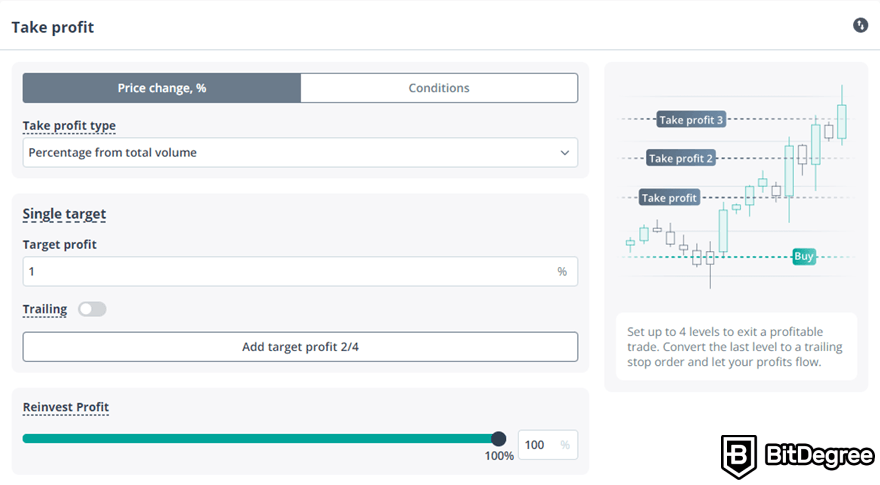
1. 3Commas AI Bot live performance metrics
3Commas integrates AI-driven signals to automate DCA and grid strategies across major exchanges. Users track real-time ROI, drawdown, and trade volume through a unified dashboard. The platform’s live performance metrics allow traders to audit strategy efficacy before scaling capital, ensuring transparency in how algorithms execute high-frequency trades during volatile market conditions.
2. Pionex AI Grid Bot profitability analysis
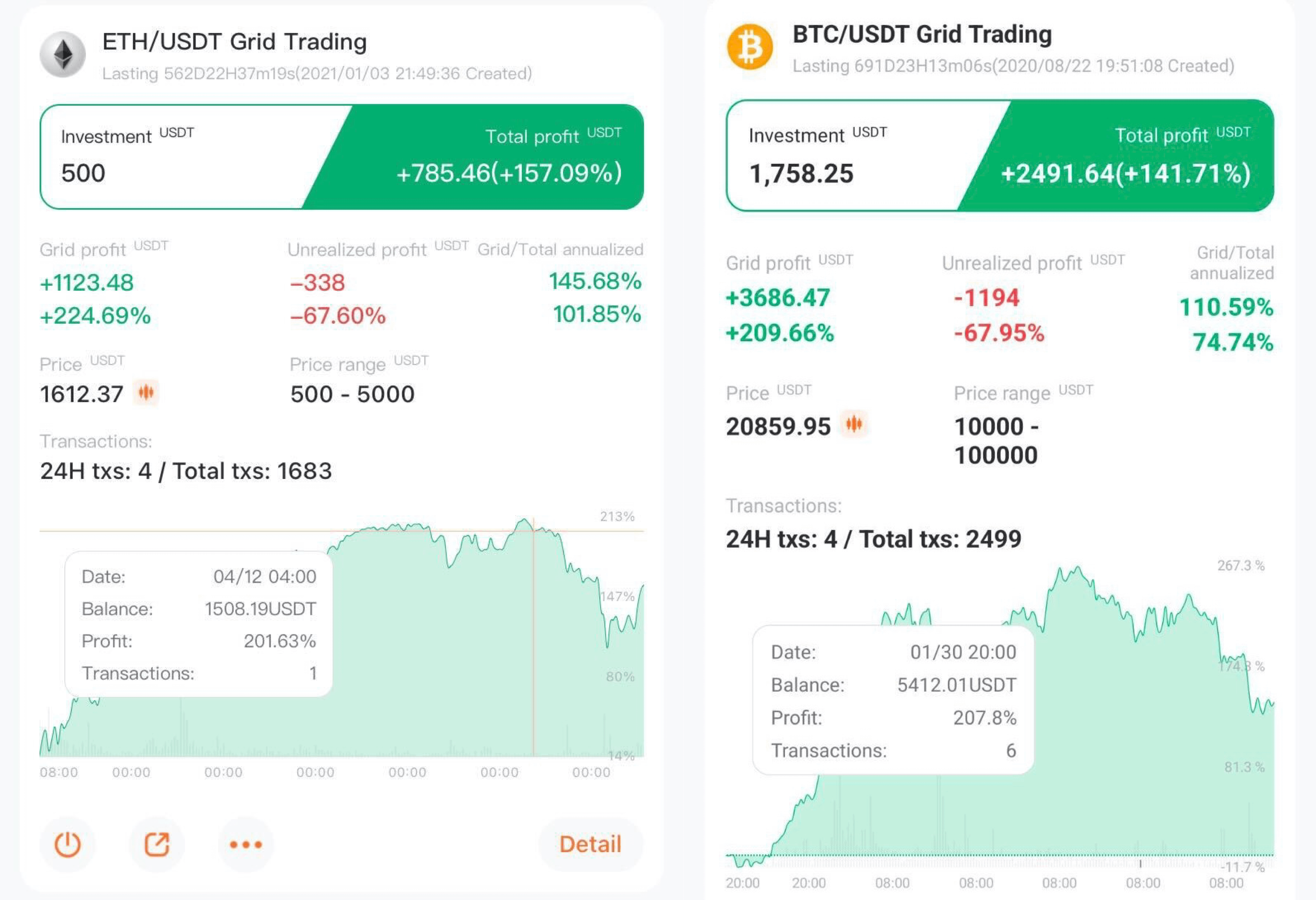
Pionex embeds 16 free trading bots, with its AI Grid Bot adjusting grid density based on volatility. Profitability stems from capturing small price fluctuations in ranging markets. The bot’s automated buy-low-sell-high mechanics require minimal oversight, making it ideal for passive income generation while minimizing emotional decision-making during sharp crypto price swings.
3. Cryptohopper custom AI strategy results
Cryptohopper enables users to backtest and deploy custom AI strategies using historical data. Its AI Strategy Designer suggests optimal parameters based on market trends. Traders analyze concrete results from simulated runs before going live, ensuring that automated decisions align with specific risk tolerances and profit targets derived from rigorous quantitative analysis.

4. Bitsgap AI trading bot live data
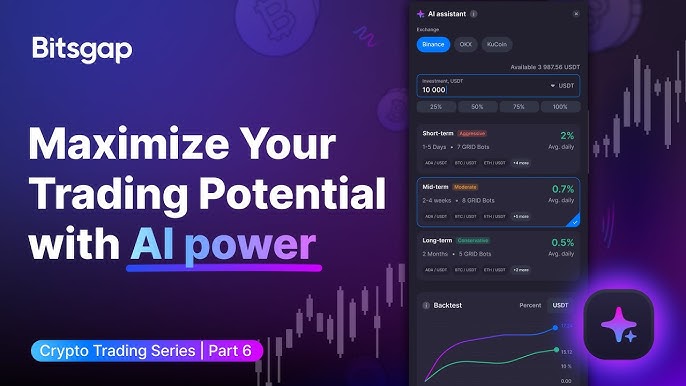
Bitsgap offers live data visualization for AI-driven arbitrage and grid trading across centralized and decentralized exchanges. The platform displays real-time profit accumulation and trade execution logs. Traders leverage this transparency to monitor bot performance continuously, adjusting parameters to maximize returns while mitigating risks associated with sudden market liquidity changes.
5. TradeSanta AI automation performance review
TradeSanta simplifies AI automation with pre-set strategies that adapt to market conditions. The platform reviews performance through detailed trade histories and profit/loss statements. Users can customize risk levels and stop-loss orders, ensuring that automated trades remain within predefined boundaries. This structured approach helps maintain consistent performance without constant manual intervention.

Pick the right fit
Choosing an AI crypto trading bot isn’t about finding the "best" one; it’s about finding the one that fits your specific trading style and risk tolerance. A bot that works for high-frequency arbitrage will likely blow up an account trying to swing-trade Bitcoin. Before committing capital, verify that the platform’s core features align with your strategy.
Define your risk tolerance
AI bots execute trades automatically, meaning losses accumulate faster than manual trading. Determine your maximum drawdown limit before connecting any API keys. Look for bots that offer built-in stop-loss mechanisms and position sizing controls. If a platform claims "guaranteed profits," treat it as a red flag. Profitability depends on market conditions and parameter setup, not just the AI.
Check exchange compatibility
Not all bots support every major exchange. Ensure the bot integrates with your preferred exchange (e.g., Binance, Coinbase, Kraken) and supports the specific trading pairs you want to trade. Some bots restrict access to advanced API features like futures or margin trading. Verify that the bot’s API permissions are limited to trading only—never grant withdrawal permissions to any third-party software.
Test with a demo account
Most reputable platforms offer a paper trading or demo mode. Use this to test the AI’s logic without risking real funds. Observe how the bot behaves during high-volatility events. If the bot doesn’t perform consistently in a simulated environment, it will likely fail in live markets. Look for transparent performance logs that show both wins and losses.
Compare fees and pricing
Bot profitability is heavily impacted by fees. Some platforms charge a monthly subscription, while others take a percentage of profits. Calculate the total cost of ownership, including exchange trading fees. A bot with a low monthly fee but high trading volume can end up costing more than a premium bot with fewer trades. Choose a pricing model that scales with your activity.
| Feature | Why It Matters |
|---|---|
| Stop-Loss Controls | Limits downside risk automatically |
| API Security | Prevents unauthorized fund access |
| Demo Mode | Tests strategy without financial risk |
| Fee Structure | Impacts net profitability |


As an Amazon Associate, we may earn from qualifying purchases.
FAQ: AI-Powered Crypto Trading Bots Dominating 2026
Which AI crypto projects are positioned to boom in 2026?
While trading bots execute strategies, the underlying AI infrastructure tokens are seeing significant adoption. Top contenders include NEAR Protocol (NEAR) for its scalable AI data layer, Bittensor (TAO) which decentralizes machine learning models, and Render (RENDER) for distributed GPU computing power. These projects provide the computational backbone that powers modern algorithmic trading systems.
What is the latest generation of AI trading bots in 2026?
The 2026 landscape has shifted from simple rule-based scripts to adaptive agents. Leading platforms now integrate advanced reasoning models similar to Claude Opus 4.6 and Sonnet 4.6, which offer extended context handling and natural language strategy interpretation. These bots can analyze complex market narratives and adjust parameters in real-time, moving beyond static technical indicators.
Are AI crypto trading bots actually profitable?
Profitability is not automatic; it depends entirely on strategy selection, market conditions, and risk management. Research indicates that bots succeed when they are properly calibrated to specific volatility regimes. Without strict risk controls and continuous parameter optimization, automated systems can amplify losses just as quickly as they capture gains.
Which AI trading bot platform is best for beginners?
For those new to automated trading, 3Commas and Pionex are frequently recommended due to their user-friendly interfaces and built-in strategy templates. These platforms allow users to deploy pre-configured AI strategies without coding knowledge. However, beginners should start with small capital allocations to understand how the bots react to different market cycles before scaling up.
No comments yet. Be the first to share your thoughts!