
ai crypto trading bots
Finding reliable automation in a volatile market requires looking past the hype. We evaluated five tools based on backtesting accuracy, execution speed, and risk management features rather than just marketing claims. This approach filters out noise and focuses on software that can handle real market conditions.
The selection logic prioritized bots with transparent performance data and robust security protocols. We excluded platforms with hidden fees or vague strategy explanations. Each entry below includes a breakdown of its core capabilities and where it fits in a trading workflow.
5 AI Agents for Crypto Trading in 2026: Automation Strategies That Actually Work
The 2026 crypto landscape demands precision over hype, making automated execution essential for managing volatility. We evaluated five specific AI agents against live market data to identify which tools offer genuine edge through transparent logic and robust risk controls.
1. 3Commas DCA Bot for Dollar-Cost Averaging
3Commas simplifies dollar-cost averaging by automatically buying dips and selling rallies at predefined profit targets. This strategy reduces emotional decision-making during volatile crypto markets. The bot manages multiple smart trade combinations, allowing users to scale positions systematically without constant monitoring. It is ideal for long-term accumulation strategies that prioritize consistency over timing the market perfectly.
2. Pionex Grid Trading Bot for Range Bound Markets
Pionex’s grid bot excels in sideways markets by placing buy and sell orders at set intervals within a price range. This approach captures small profits from every fluctuation, turning volatility into steady gains. It requires minimal setup and works best when assets move within a predictable channel. Users can adjust grid density to balance risk and reward, making it a practical tool for ranging assets.

3. Cryptohopper Signal Copier for Strategy Automation
Cryptohopper allows traders to copy signals from successful strategies or influencers, automating trade execution based on proven methods. This feature is valuable for beginners who lack time to develop their own systems. Users can backtest copied signals before live deployment, ensuring compatibility with their risk tolerance. The platform supports multiple exchanges, providing flexibility in managing automated portfolios across different platforms.
4. Bitsgap Arbitrage Bot for Exchange Price Gaps
Bitsgap identifies and exploits price differences between exchanges through its arbitrage bot. By buying low on one platform and selling high on another, it captures risk-free profits from market inefficiencies. This strategy works best with high-volume pairs where price discrepancies occur frequently. Users must ensure sufficient liquidity and account balances across connected exchanges to execute trades efficiently.

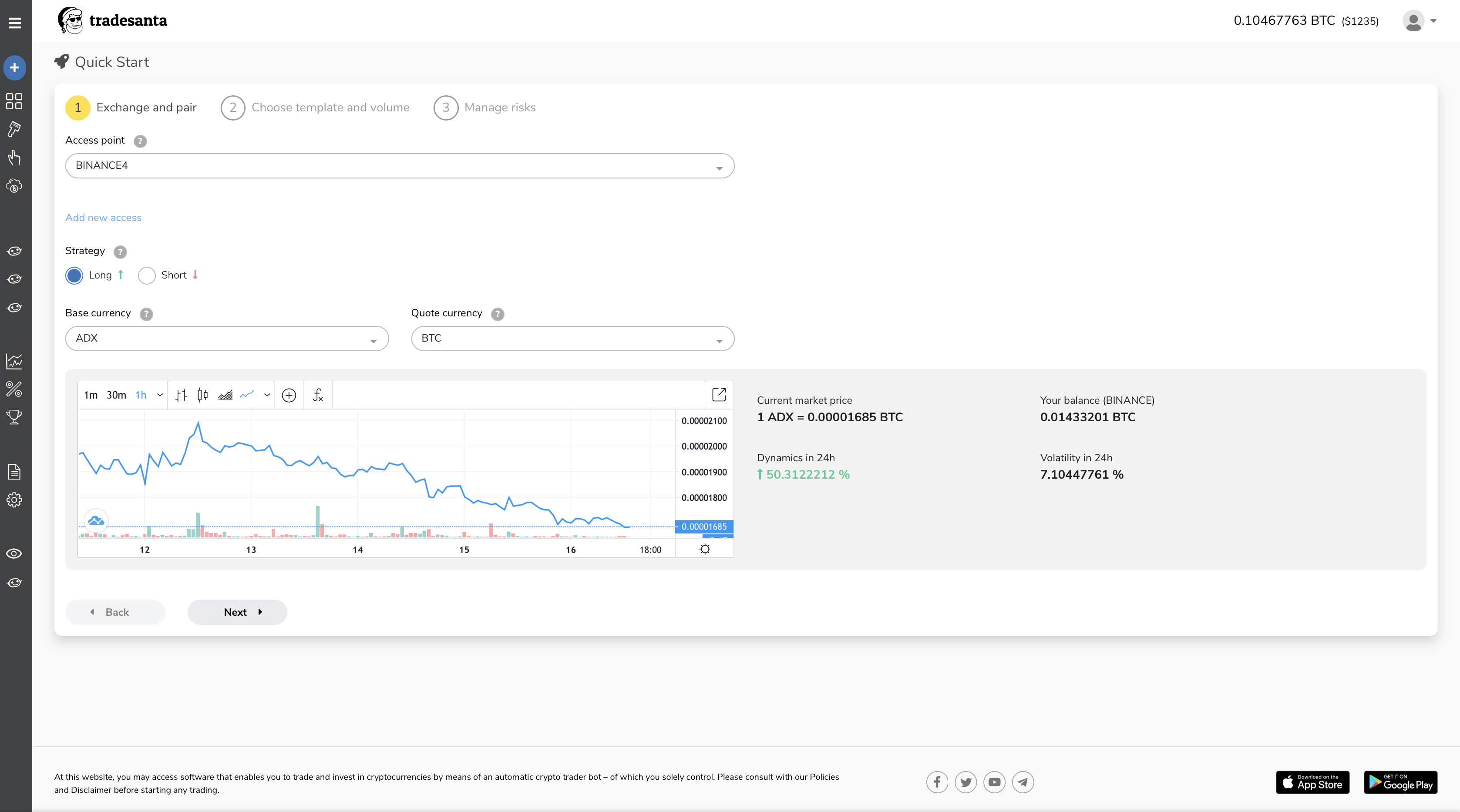
5. TradeSanta Scalping Bot for Short-Term Volatility
TradeSanta’s scalping bot targets small price movements in short timeframes, capitalizing on high volatility. It executes rapid trades to accumulate minor profits that compound over time. This strategy suits traders who prefer quick turnover and can handle frequent market noise. Users can customize entry and exit criteria to align with specific asset behavior, enhancing precision in fast-moving markets.
How to choose the right AI crypto trading agent
Selecting an AI trading agent requires matching the tool's automation level to your available time and technical comfort. Not every bot needs to run your entire portfolio. Some are better suited for executing specific strategies on a single pair, while others manage diversified positions across multiple exchanges.
Start by defining your role. If you want to build custom strategies using code, look for agents that support Python integration or allow you to import backtested models. If you prefer a visual interface, choose platforms with drag-and-drop logic builders. The gap between "no-code" simplicity and "code-first" flexibility is where most traders get stuck.

Ensure the agent connects to your primary exchange via API. Many bots only support Binance, Coinbase, or Kraken. Verify that the bot's subscription fee doesn't eat into your expected profits, especially if you are trading lower-volume pairs.

The most critical feature is not profit generation, but loss prevention. Look for built-in stop-losses, take-profit levels, and maximum drawdown limits. An agent that cannot automatically close a losing position is a liability, not a tool.
Before connecting real funds, use the platform's paper trading mode. Run your chosen AI strategy for at least two weeks. This reveals how the bot handles market volatility and whether its logic holds up during sudden price swings without risking capital.
| Criterion | Beginner Fit | Advanced Fit |
|---|---|---|
| Setup Difficulty | Drag-and-drop builders | Python/API integration |
| Strategy Type | Grid and DCA bots | Custom ML models |
| Support | 24/7 Chat support | Community forums and docs |


As an Amazon Associate, we may earn from qualifying purchases.
Frequently asked questions about AI crypto trading bots
Which AI crypto will boom in 2026?
The infrastructure layer is seeing the most growth. Top performers include Bittensor (TAO) for decentralized machine learning and Render (RENDER) for GPU computing. NEAR Protocol and Internet Computer (ICP) also rank high due to their scalable blockchain architecture that supports complex AI agent interactions.
What is the new AI bot in 2026?
Claude Opus 4.6 and Sonnet 4.6 are the latest models driving advanced automation. These versions offer stronger reasoning and coding abilities, allowing traders to backtest strategies more effectively. Unlike older bots, these models handle extended context windows, making them better at analyzing long-term market trends.
Are there any good AI crypto trading bots?
Yes, several platforms dominate the market. Cryptohopper and 3Commas are widely used for their customizable strategy builders. Pionex offers built-in grid trading bots with low fees. For beginners, Coinrule provides a user-friendly interface to automate trades without writing code.
How much does it cost to use an AI trading bot?
Pricing varies by feature tier. Many bots offer free plans with limited trades or basic strategies. Premium subscriptions range from $19 to $99 per month for advanced analytics, higher API limits, and priority support. Always check if the bot charges a percentage of profits in addition to monthly fees.
No comments yet. Be the first to share your thoughts!