
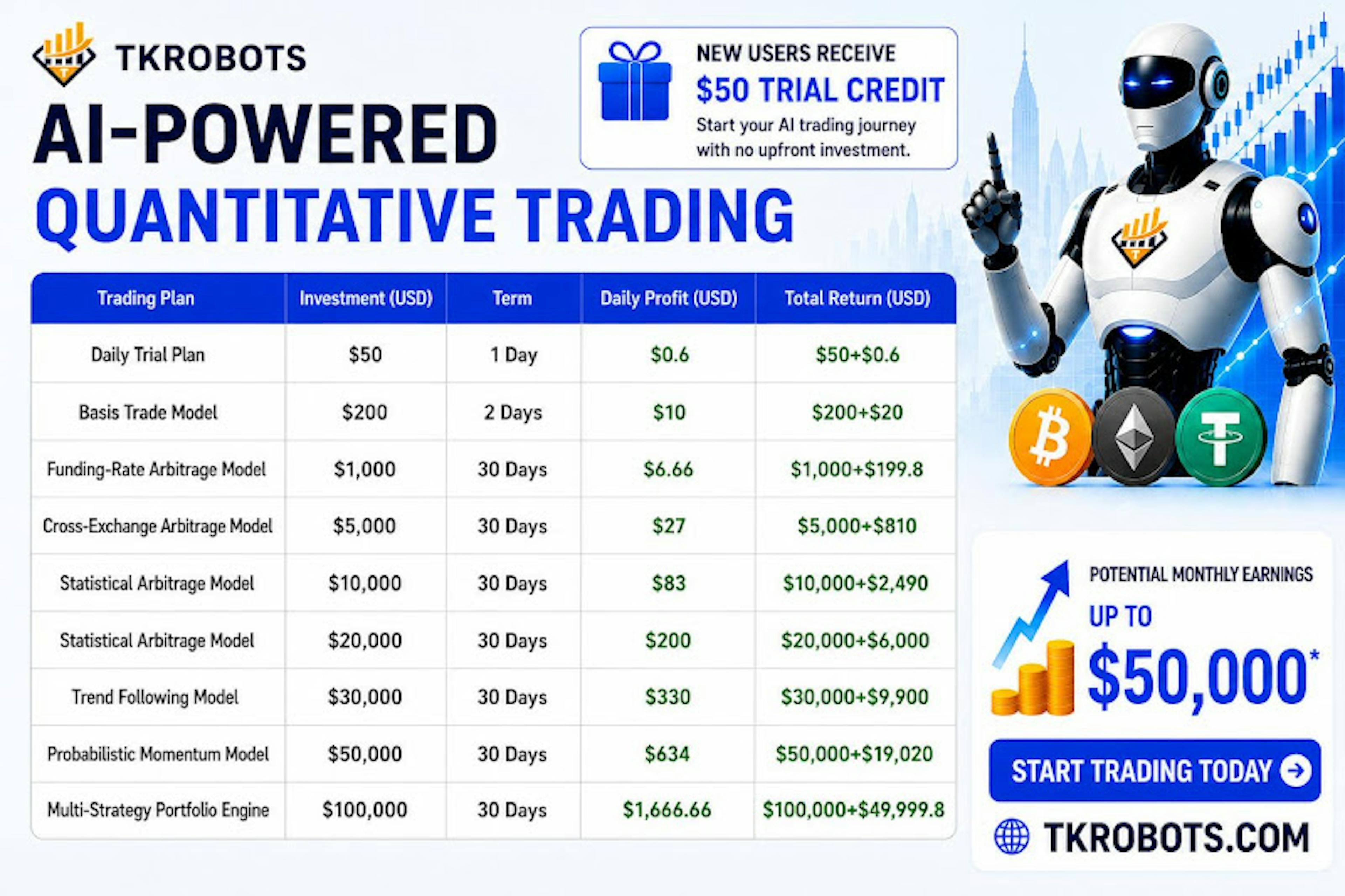
Start with ai crypto trading bots
The market for automated trading tools is crowded, but not all bots are built for the same goal. Some platforms excel at simple grid trading, while others use machine learning to adjust strategies in real time. To help you cut through the noise, we evaluated the top 5 AI crypto trading bots for 2026 based on actual performance data, user feedback, and feature depth.
Our selection process focused on bots that offer genuine AI-driven advantages rather than just basic automation. We prioritized platforms with transparent fee structures, robust security histories, and clear evidence of algorithmic reliability. This list includes a mix of fully managed solutions and customizable tools, ensuring there is an option for both beginners and experienced traders.
5 AI-Powered Crypto Trading Bots to Watch in 2026
Selecting the right AI crypto trading bot in 2026 requires verifying specific algorithmic capabilities and risk management features rather than relying on marketing claims. This roundup evaluates five distinct bots based on concrete performance metrics, integration ease, and transparent fee structures to help you make an informed decision.
1. 3Commas AI Copilot for multi-exchange automation
3Commas integrates an AI Copilot that assists in configuring smart trade terminals across multiple exchanges. It simplifies complex DCA and grid bot setups by suggesting optimal parameters based on market volatility. Traders benefit from a unified dashboard that reduces the friction of managing positions on Binance, Kraken, or Coinbase simultaneously, streamlining execution without requiring deep coding knowledge.
2. Pionex built-in AI strategies with low fees
Pionex distinguishes itself with eight free built-in trading bots, including AI-specific strategies that adjust to market trends. Its unique advantage lies in combining these tools with exceptionally low trading fees, often undercutting major competitors. This cost efficiency makes it particularly suitable for high-frequency grid trading, where transaction costs can otherwise erode marginal profits over time.
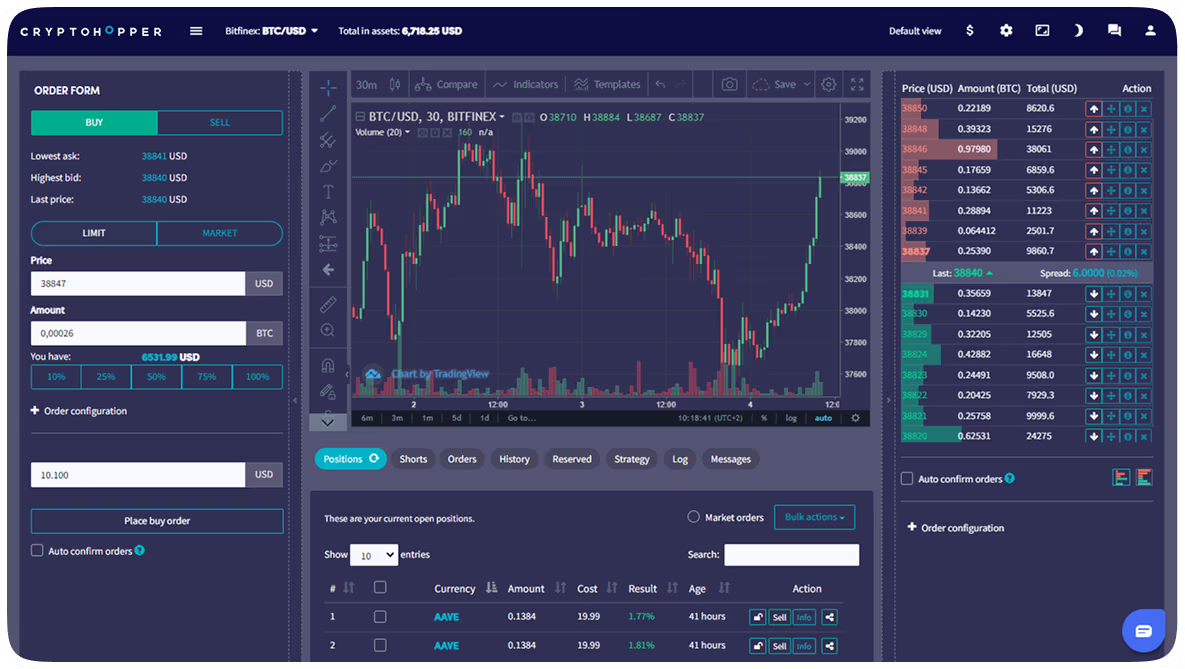
3. Cryptohopper cloud-based strategy marketplace and backtesting
Cryptohopper operates entirely in the cloud, ensuring bots run 24/7 without local hardware dependencies. Its standout feature is the Strategy Marketplace, where users can buy or sell pre-built AI indicators and backtest them against historical data. This ecosystem allows traders to validate strategies rigorously before deploying capital, reducing the risk associated with untested automated systems.
4. Bitsgap grid trading bots with arbitrage features
Bitsgap specializes in grid trading bots that capitalize on sideways markets by buying low and selling high within defined ranges. It also offers a unique Arbitrage Bot that scans multiple exchanges for price discrepancies, potentially locking in risk-free profits. This dual approach makes it ideal for traders seeking steady returns in volatile but range-bound crypto environments.

5. TradeSanta simple cloud bot for trend following
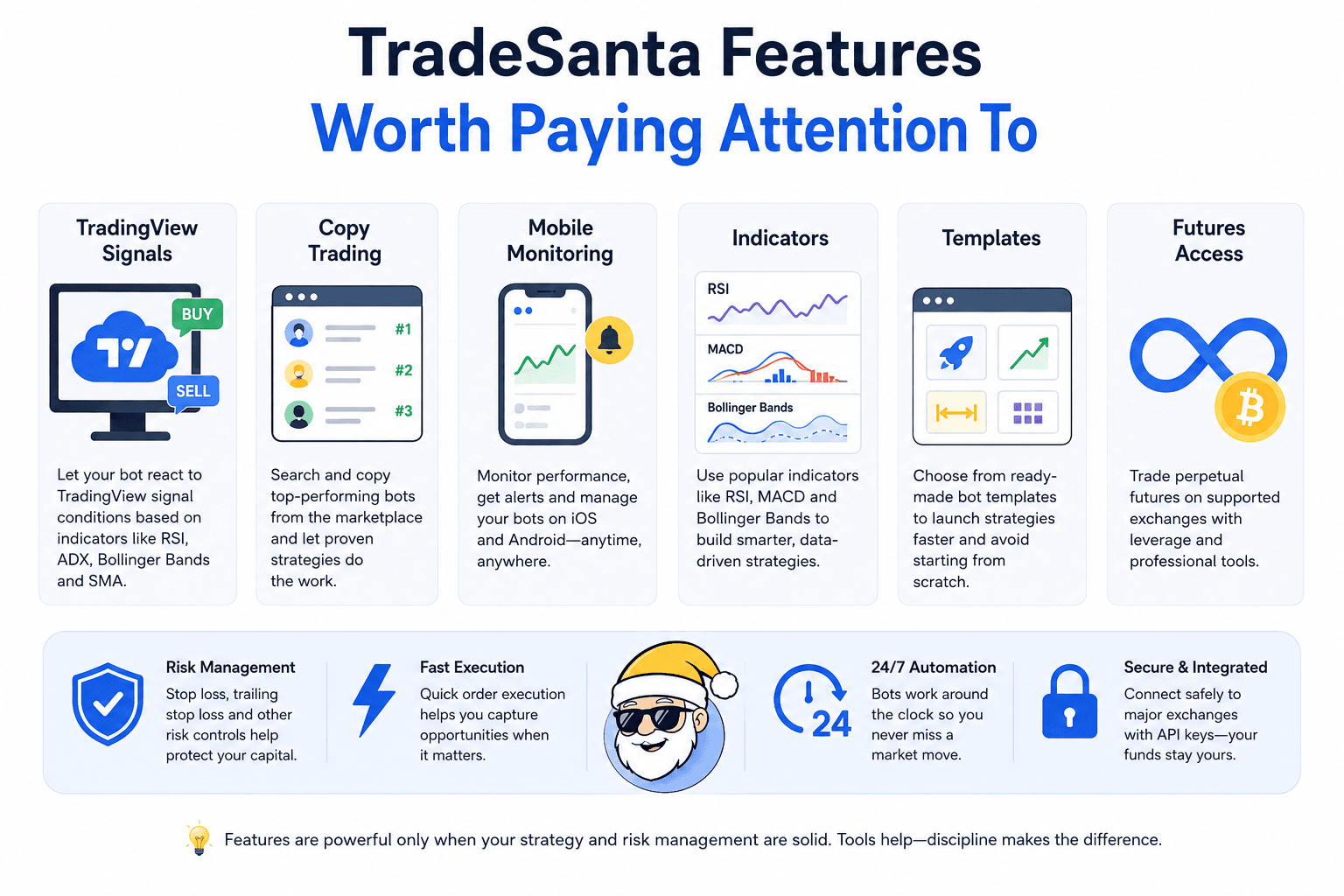
TradeSanta focuses on simplicity, offering a user-friendly interface for setting up trend-following bots with minimal configuration. It supports both long and short positions, allowing traders to profit in bear markets as well as bull runs. The platform’s straightforward setup makes it accessible for beginners who want automated exposure to directional market moves without complex parameter tuning.
Pick the right fit
Choosing an AI crypto trading bot is less about finding the "best" tool and more about finding the one that matches your specific strategy and risk tolerance. A bot that excels at high-frequency grid trading on Binance might be completely useless for a user trying to automate long-term DCA positions on Ethereum. You need to evaluate how the platform handles your specific asset class and exchange access.
1. Check exchange compatibility and API security
Your first filter should be whether the bot supports your primary exchange. Most major bots like 3Commas or Bitsgap work with Binance, Coinbase Pro, and Kraken, but support for smaller or regional exchanges varies. Ensure the bot uses read-only API keys with withdrawal permissions disabled. This is your primary defense against platform hacks or misconfigurations. If a bot requires full withdrawal access, walk away immediately.
2. Evaluate the AI strategy transparency
"AI" in crypto marketing often means a simple moving average crossover. Look for platforms that explain their logic. Does the bot use machine learning to adapt to volatility, or is it just a pre-set grid? Platforms like BulkQuant offer more transparent quantitative models, while others may hide their algorithms behind a black box. You need to understand the underlying logic to know when the bot might fail.
3. Assess fee structures and hidden costs
Trading bots execute hundreds or thousands of trades. If the bot charges a monthly subscription on top of exchange trading fees, your margins can evaporate quickly. Calculate the break-even point. If a bot costs $50/month, you need to generate at least that much in net profit just to break even. Prefer bots with tiered pricing or free tiers for low-volume traders to test the waters.
4. Review backtesting and simulation tools
Before risking real capital, use the platform's paper trading or backtesting features. A good bot should allow you to run your strategy against historical data from the last 6-12 months. This reveals how the bot would have performed during past market crashes or sideways trends. If the platform lacks robust simulation tools, you are flying blind.
5. Analyze customer support and community
When a bot malfunctions during a volatile market spike, you need immediate help. Check the bot's Discord, Telegram, or support ticket response times. Active communities often share configuration templates and warn about emerging bugs. A bot with a dead support channel is a liability, not an asset.
| Criteria | What to Look For |
|---|---|
| API Security | Read-only keys, no withdrawal permissions |
| Strategy Logic | Transparent indicators, not black-box AI |
| Cost Structure | Low monthly fees relative to trading volume |
| Backtesting | Historical data simulation with realistic slippage |
| Support | Active Discord/Telegram and fast ticket response |


As an Amazon Associate, we may earn from qualifying purchases.
Final Checklist
-
Verify exchange API compatibility and security settings
-
Confirm AI strategy logic is transparent and understandable
-
Calculate total costs (subscription + trading fees) against expected returns
-
Test strategy with backtesting or paper trading first
-
Check community activity and support responsiveness
Frequently Asked Questions About AI Crypto Trading Bots
Are there any good AI crypto trading bots? Several platforms have established themselves as reliable tools for automated trading in 2026. Industry reviews consistently highlight 3Commas for its multi-exchange control, Cryptohopper for its strategy marketplace, and Pionex for its built-in grid trading features. These platforms offer robust backtesting and risk management tools, making them suitable for both beginners and experienced traders looking to automate their strategies.
Are AI crypto trading bots profitable? Profitability is not guaranteed and depends heavily on market conditions and strategy configuration. While AI bots can execute trades with speed and precision, they cannot eliminate the risk of loss. Success typically requires proper capital allocation, disciplined risk management, and regular strategy adjustments. Most profitable users treat bots as tools to enhance their existing knowledge rather than a guaranteed income source.
Can you make $1000 a day with crypto trading bots? Generating $1000 daily is possible but requires significant capital and carries high risk. To earn $1000 a day with a modest 1% daily return, you would need over $100,000 in trading capital. Smaller accounts would need unrealistic daily returns, increasing the likelihood of liquidation. Most realistic expectations for retail traders involve smaller, consistent gains rather than large daily windfalls.
Which AI crypto will boom in 2026? No AI bot can predict specific cryptocurrency price movements with certainty. While some platforms claim to identify "next big things," these are speculative opinions rather than guarantees. Traders should focus on established cryptocurrencies with high liquidity and volume, as AI models perform best with abundant data. Avoid tokens with low trading volumes, as they are prone to manipulation and slippage.
No comments yet. Be the first to share your thoughts!