
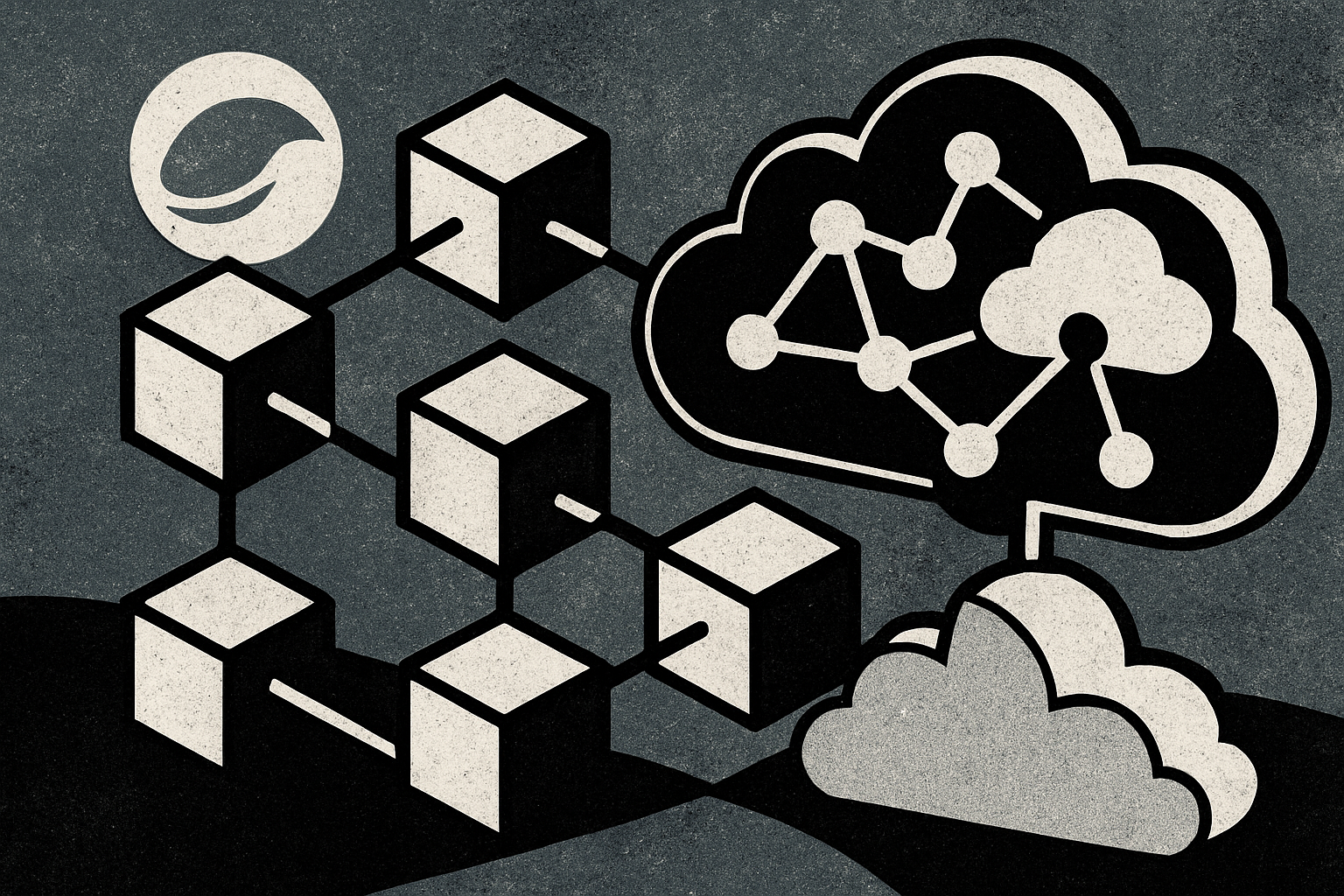
Centralized AI infrastructure has long dominated the landscape, leaving developers and enterprises at the mercy of a handful of tech giants. But the tides are shifting. 0G Labs is at the forefront of this transformation, designing a modular infrastructure that empowers anyone to build, scale, and manage decentralized AI compute networks with unprecedented flexibility. At its core is a vision: democratize access to AI by removing barriers imposed by closed ecosystems and high costs.
Modular Architecture: The Heart of 0G Labs’ Approach
What sets 0G Labs apart is its modular design philosophy. Instead of forcing projects into an all-or-nothing migration, 0G’s infrastructure allows developers to select only the components they need, whether that’s decentralized storage, verifiable compute, or programmable data availability. This approach dramatically lowers integration friction and fosters experimentation across diverse use cases in DePIN AI compute networks.
For example, a project focused on blockchain-based machine learning can incorporate 0G’s storage solution independently. This means benefiting from AI-optimized storage with ultra-low costs and verifiable permanence, without touching existing compute or consensus layers. As more components are needed (like scalable inference or on-chain model training), they can be plugged in seamlessly.
The Aristotle Mainnet: A Unified Foundation for Decentralized AI
A major milestone for 0G Labs was the launch of the Aristotle Mainnet on September 21,2025. This event unified decentralized storage, compute power, and data availability into one infinitely scalable Layer-1 blockchain purpose-built for AI workloads. Supported by over 100 partners, including industry heavyweights like Chainlink, Google Cloud, and Alibaba Cloud, Aristotle signals a new era where open collaboration trumps platform lock-in.
The mainnet’s architecture is designed to scale with the explosive demands of modern AI applications. Whether powering edge inference for IoT devices or supporting massive distributed training jobs across continents, Aristotle’s modularity ensures that resources are allocated efficiently, and economically.
Key Advantages: Flexibility Meets Cost Efficiency
The benefits of this modular infrastructure layer are profound:
- Flexibility: Integrate only what you need, storage, compute, or data availability, without overhauling your entire stack.
- Scalability: Designed from day one to handle petabyte-scale datasets and distributed computation across global nodes.
- Cost Efficiency: By leveraging decentralized resources instead of centralized hyperscalers, projects can reduce operational expenses while gaining censorship resistance and auditability.
This isn’t just theory, it’s already being put into practice by a growing ecosystem of partners building everything from privacy-preserving analytics platforms to verifiable AI inference engines atop 0G’s architecture. The result? A more open and accessible future for AI development where innovation isn’t stifled by gatekeepers or exorbitant fees.
Another critical differentiator for 0G Labs is its focus on verifiable AI inference and programmable data availability. In traditional AI pipelines, users must trust service providers to deliver correct computations and store data reliably. 0G’s decentralized protocol flips this paradigm by enabling cryptographic proofs for both compute and storage, allowing any participant to independently verify results. This transparency is a game-changer for industries where trust, compliance, and auditability are non-negotiable.
The modularity of the 0G stack also fosters rapid evolution in the DePIN landscape. As new breakthroughs emerge in AI or blockchain, developers can swap out or upgrade individual components without rewriting their entire infrastructure. This composability is already attracting projects that require cutting-edge AI capabilities but refuse to compromise on decentralization or user sovereignty.
Ecosystem Momentum: A Thriving Community of Builders
The launch of Aristotle Mainnet catalyzed a surge in ecosystem activity. Over 100 partners have already joined forces with 0G Labs, from established cloud giants to nimble DePIN startups, each leveraging the platform’s unique strengths for their own verticals. These collaborations are accelerating the pace of innovation across sectors like decentralized finance, supply chain intelligence, and privacy-first health data analytics.
What’s especially compelling is how modular decentralized AI protocols like 0G are lowering barriers for smaller teams and solo developers. By providing access to scalable compute and secure storage without upfront hardware investment, 0G is democratizing participation in the global AI economy.
Looking Ahead: The Roadmap for Decentralized Intelligence
As we look beyond Aristotle’s mainnet launch, the roadmap for 0G Labs includes further enhancements to programmable data availability, deeper integrations with other leading DePIN networks, and expanded support for on-chain machine learning workflows. The vision is clear: an open marketplace where anyone can contribute resources, compute cycles, storage space, novel algorithms, and be rewarded transparently via crypto-native incentives.
This approach not only counters Big Tech consolidation but also aligns incentives among all network participants. Whether you’re running a node, developing an app, or training models collaboratively with peers worldwide, you’re part of an emergent ecosystem defined by shared ownership and permissionless innovation.
If you’re curious how these concepts play out in real-world deployments, or want to explore building atop this next-generation stack, dive deeper into our guides on transforming on-chain model training or see how modular Layer-1 blockchains empower DePIN wireless networks.
The age of truly decentralized AI isn’t just coming, it’s being built right now by communities like those rallying around 0G Labs. For developers seeking flexibility, enterprises demanding transparency, or innovators dreaming bigger than legacy platforms allow, the modular future starts here.



No comments yet. Be the first to share your thoughts!