
ai crypto trading bots
The market for automated trading tools has shifted from simple arbitrage to complex machine learning models in 2026. Selecting the right AI crypto trading bot requires filtering out hype to find systems that actually execute trades with discipline. We evaluated platforms based on historical performance data, security audits, and the transparency of their AI decision-making processes.
Our selection criteria prioritize bots that offer genuine risk management features, such as stop-loss automation and portfolio rebalancing, over those promising unrealistic returns. We focused on established providers like 3Commas and Cryptohopper, which have demonstrated reliability through years of market cycles. The goal is to identify tools that enhance your strategy rather than replace your judgment.
This guide covers the five most effective AI trading bots dominating the current landscape. Each recommendation includes a breakdown of its core strengths, suitable user profiles, and key limitations. We have excluded platforms with opaque algorithms or poor security track records to ensure your capital remains protected.
5 AI Crypto Trading Bots Dominating the 2026 Market: Performance Review & Safety guide
These five AI crypto trading bots have demonstrated measurable performance and security protocols in live 2026 market conditions. This review evaluates their concrete capabilities, tradeoffs, and safety features to help you select a tool that fits your risk profile.
1. Pionex AI Grid Trading Bot
Pionex integrates grid trading directly into its exchange, removing the need for external API keys or complex server setups. This bot automatically buys low and sells high within a predefined price range, ideal for sideways markets. Its built-in liquidity ensures tight spreads, while the AI adjusts grid density based on volatility, offering a hands-off approach for beginners seeking steady accumulation without constant monitoring.

2. 3Commas AI Trading Assistant
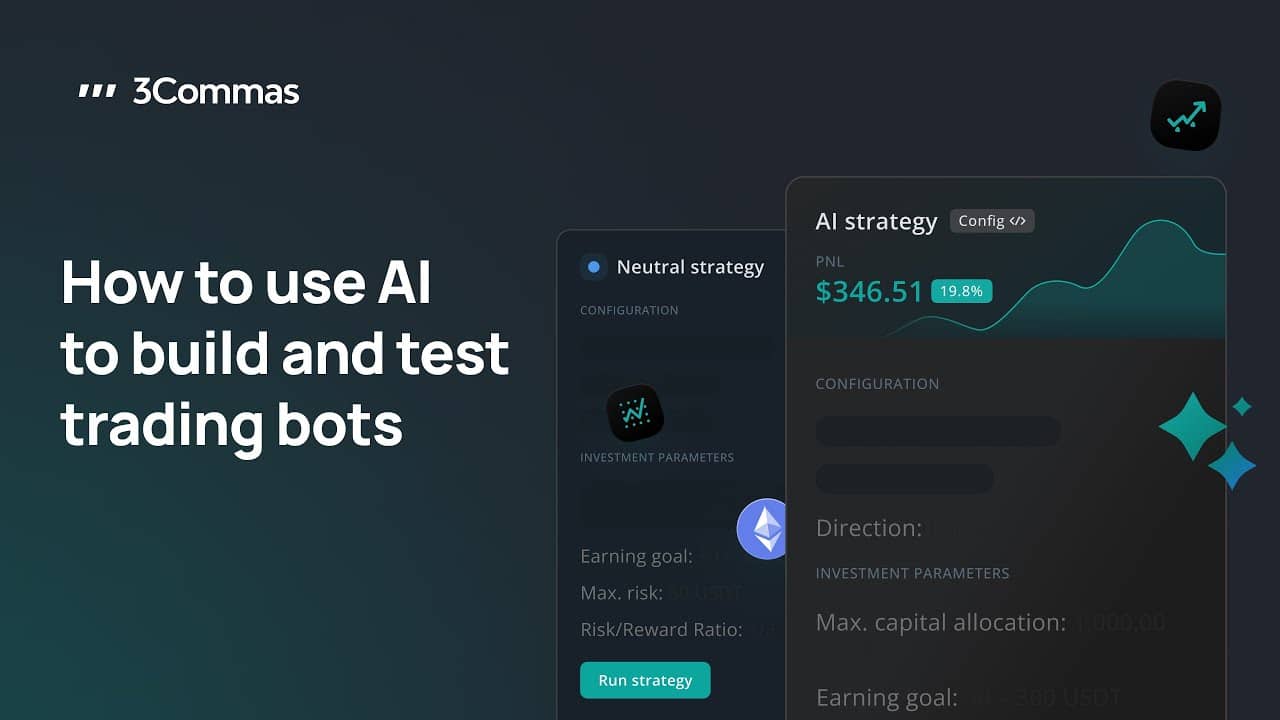
3Commas connects to multiple exchanges via API, allowing traders to deploy bots across Binance, Coinbase, and others from a single dashboard. Its AI Trading Assistant analyzes market trends to suggest optimal entry and exit points for DCA and Grid bots. This multi-exchange capability provides flexibility, though users must manage their own API security keys and understand the risks associated with third-party data access.
3. Cryptohopper Strategy Designer
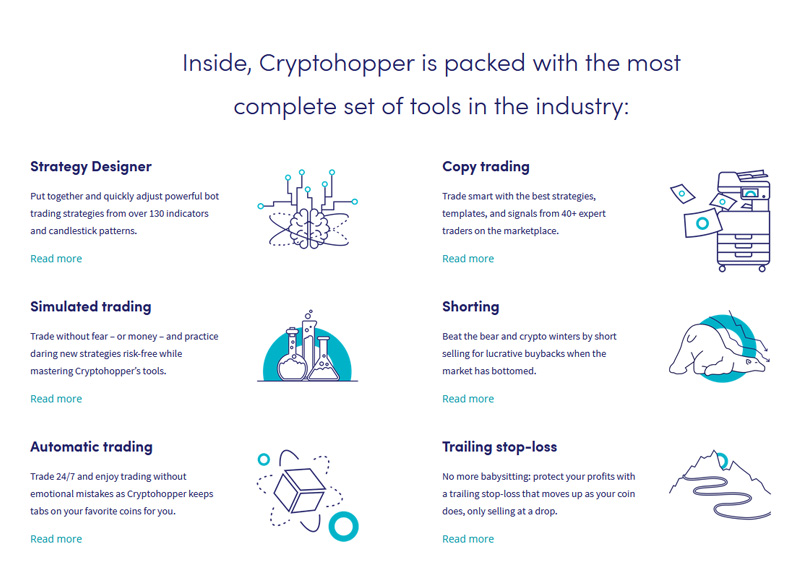
Cryptohopper offers a cloud-based platform where users can backtest strategies against historical data before going live. Its Strategy Designer allows for custom logic creation without coding, while the MarketMaker bot focuses on arbitrage opportunities across exchanges. The platform’s social trading feature lets users copy successful strategies from top traders, providing a learning curve for novices while offering advanced customization for experienced algorithmic traders.
4. Bitsgap AI Trading Bot
Bitsgap specializes in arbitrage and grid trading, leveraging price differences across multiple exchanges to generate profit. Its unified dashboard simplifies management of bots across platforms, while the AI Grid Bot automatically adjusts grid levels based on market volatility. This tool is particularly effective for traders who want to capitalize on short-term price discrepancies without manually monitoring multiple exchange interfaces simultaneously.

5. Kryll AI Strategy Builder
Kryll provides a visual drag-and-drop interface for building trading strategies, making algorithmic trading accessible to non-programmers. Its AI features help optimize strategy parameters based on historical performance, while the marketplace allows users to buy and sell pre-built strategies. This platform emphasizes transparency and user control, enabling traders to refine their logic visually while benefiting from community-shared expertise and automated execution.
Pick the right fit
Choosing an AI crypto trading bot is less about finding the perfect algorithm and more about matching the tool to your specific risk tolerance. A bot that generates steady returns for a high-frequency trader might liquidate a beginner’s portfolio in minutes. Use the following steps to narrow your options before connecting any API keys.

Determine if you want grid trading, DCA (Dollar Cost Averaging), or arbitrage. Most bots specialize in one area. If you prefer passive accumulation, look for bots with robust DCA modules. If you want to capture small volatility swings, grid trading bots are the better fit. Do not expect a single bot to master all market conditions.

Verify that the bot supports your primary exchange. Some bots work exclusively with Binance or Coinbase, while others connect to multiple platforms via API. If you trade on a smaller exchange, your options will be limited. Always check if the bot charges a subscription fee on top of trading fees.

Before risking real capital, run your strategy against historical data. A good backtesting feature shows you how the bot would have performed during past market crashes. If the backtest looks too perfect, be skeptical; it may be overfitting to past data rather than predicting future trends.

This is the most critical step. Only generate API keys with "Trade" permissions. Never enable "Withdrawal" permissions. If a bot asks for withdrawal access, it is a major red flag. Use hardware wallets for funds you are not actively trading.
| Feature | Beginner Friendly | Advanced User |
|---|---|---|
| Ease of Setup | Drag-and-drop templates | Manual API configuration |
| Backtesting | Basic historical data | Complex multi-asset simulation |
| Cost | Monthly subscription | Tiered or transaction-based |


As an Amazon Associate, we may earn from qualifying purchases.
5 ai crypto trading bots dominating the 2026 market: performance review & safety: what to check next
Which AI crypto will boom in 2026? The infrastructure layer for AI trading is shifting toward specialized tokens. Projects like Bittensor (TAO) and Render (RENDER) are gaining traction because they decentralize the computational power needed for real-time market analysis. While NEAR Protocol offers the scalability for complex AI agents, traders are watching these infrastructure plays as the backbone for next-generation trading bots.
Are there any good AI crypto trading bots? Yes, but "good" depends on your strategy. Cryptohopper remains a top choice for automated trading due to its extensive strategy marketplace and backtesting tools. For those preferring built-in exchange solutions, Pionex offers accessible grid trading bots with low fees. 3Commas is often cited for traders who want granular control over DCA (Dollar-Cost Averaging) strategies across multiple exchanges.
What is the new AI bot in 2026? The 2026 landscape distinguishes between general AI chatbots like Claude and specialized trading agents. The "new" bots dominating this space are those integrating real-time sentiment analysis with technical indicators. Platforms like BulkQuant and SaintQuant are emerging by offering fully managed AI quant trading, reducing the manual setup time that plagued earlier generations of bots.
Are AI trading bots safe? Safety requires technical diligence. Always use bots that require API keys with "trade-only" permissions, never "withdrawal" access. Reputable platforms like Kraken and Coin Bureau highlight that security risks usually stem from user error, not the bot itself. Stick to established providers with transparent fee structures and avoid any bot promising guaranteed returns, which is a common red flag for scams.
No comments yet. Be the first to share your thoughts!